
The Reparations Resolution and the Moral Contradictions Ghana Cannot Afford to Ignore
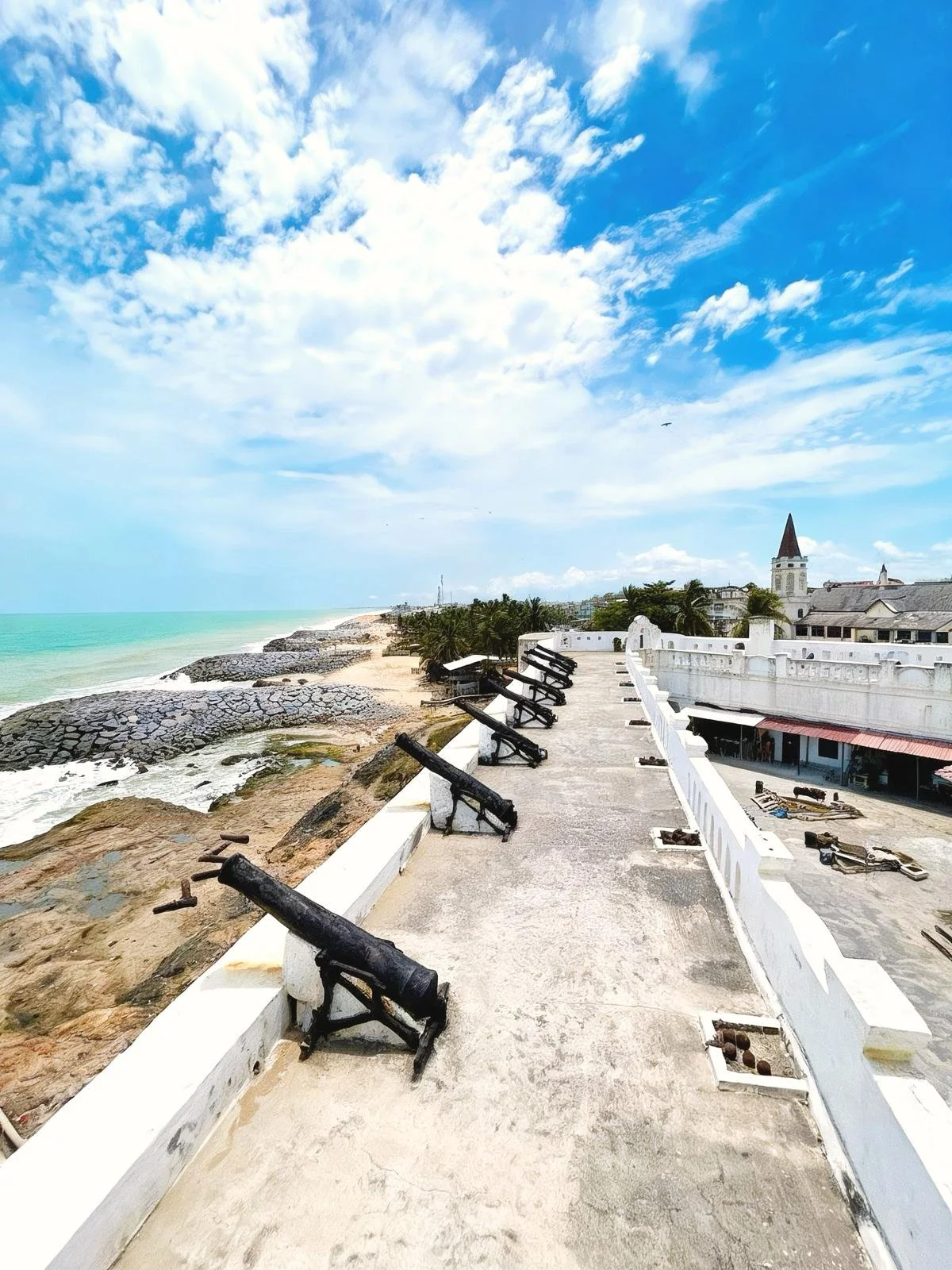
The Cape Coast Castle in Ghana.
Accra, Ghana - ‘‘A landmark UN vote raises the right questions but demands honest answers about who speaks, who benefits, and who is being left behind at home.”
There is something genuinely historic about what happened at the United Nations this week. Ghana successfully championed a resolution calling for the formal recognition of the transatlantic slave trade as a crime against humanity, and in the same breath, called on the international community to consider reparations for its descendants. For a moment, it felt like the arc of history bending in a direction long overdue.
And then the questions arrived. As they always do. As they should.
The Resolution Is Right. The Conversation Is Incomplete.
The transatlantic slave trade, which forcibly displaced an estimated 12.5 million Africans between the 15th and 19th centuries, remains one of the most documented and devastating crimes in human history. Approximately 10.7 million survived the Middle Passage, transported primarily to the Americas and the Caribbean, stripped of their languages, their families, their names, and their humanity, put to work building economies that generated extraordinary wealth for European colonial powers and the nations that inherited it.
Recognition of these crimes at the United Nations level is not a small thing. Language matters in international law. What happened was not an unfortunate chapter of history. It was a systematic, state-sponsored, commercially incentivized crime carried out over centuries. Naming it as such carries genuine weight. The resolution is right. The instinct behind it is just.
But a just instinct and a workable framework are two different things entirely. Reparations as a concept is morally sound. Wealth was extracted through forced labor. That extraction created generational poverty for the descendants of the enslaved and generational wealth for the descendants of those who enslaved them.
The problem is not the principle. The problem is that nobody championing this resolution has answered the most basic questions a serious reparations framework demands. Who receives these reparations? African Americans? Afro-Caribbeans? The families in Senegal, Ghana, Nigeria, Benin, and Angola from whose communities people were taken? All of the above, and if so, through what mechanism? Reparations in law are not abstract. They flow to identifiable individuals or groups who can demonstrate a direct connection to the harm. Can anyone currently championing this resolution name a single injured party with legal standing?
The CARICOM Reparations Commission has been working through these questions since 2013 with limited progress. The machinery for delivering reparations at scale does not yet exist. And when African governments position themselves as recipients or administrators of any such fund, the question of who actually benefits becomes uncomfortably complicated. Africa loses an estimated 88.6 billion dollars annually to illicit financial flows according to the United Nations Economic Commission for Africa, much of it moved by the very political class now asking wealthy nations to transfer additional funds in the name of historical justice.
He Who Comes to Equity Must Come With Clean Hands
There is a principle in law, ancient and unambiguous, that a party seeking justice must themselves be free of wrongdoing in the matter at hand. You cannot invoke moral authority selectively, applying it to the sins you find convenient to address while ignoring those that implicate you directly. It is called the clean hands doctrine. And it is precisely here that Ghana's position at the United Nations becomes difficult to accept without reservation.
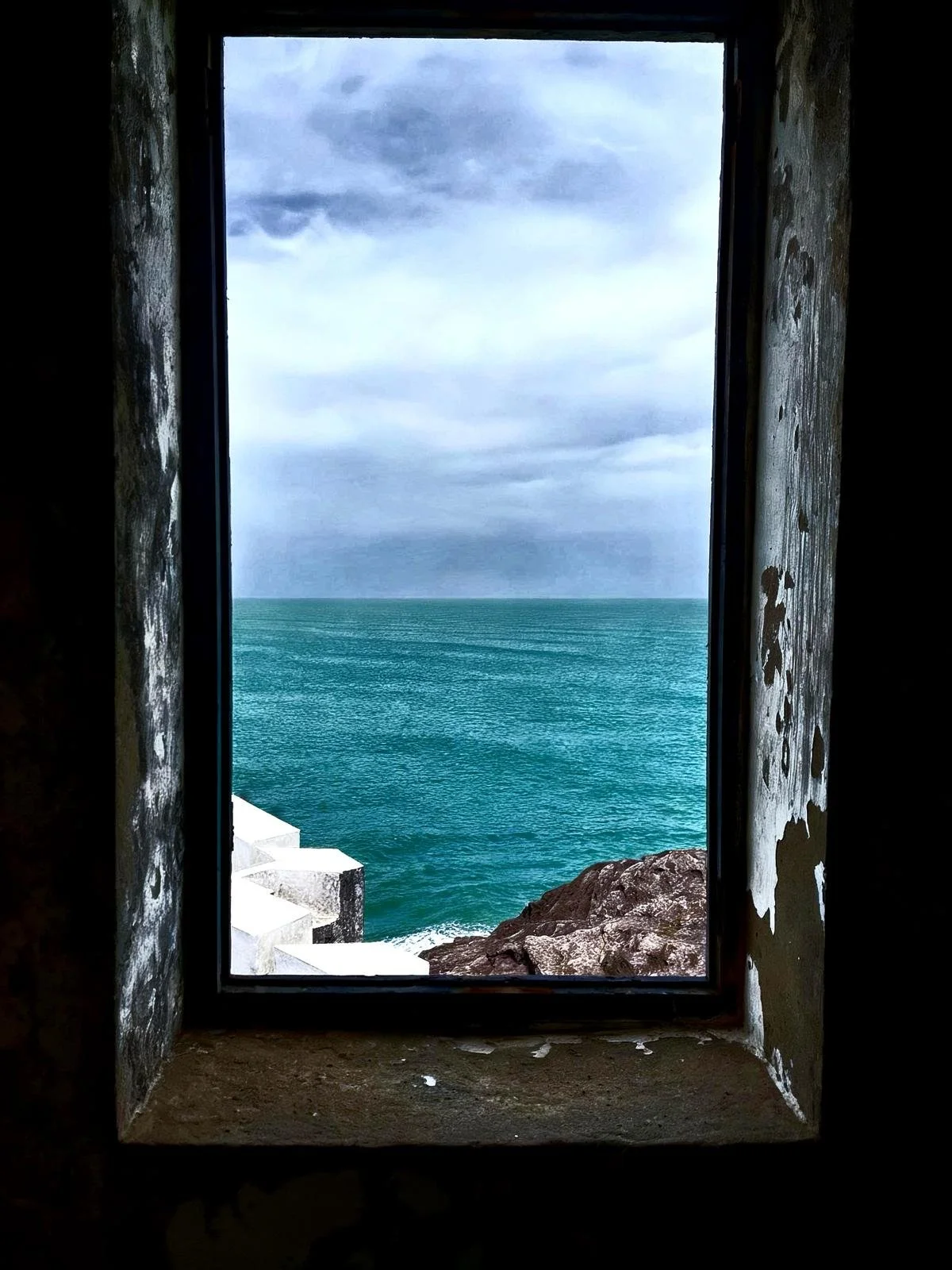
The Ashanti Kingdom of present-day Ghana was itself a slave-owning society. This is not a controversial claim. It is documented, studied, and acknowledged by African historians. At the height of its power in the 18th and 19th centuries, the Ashanti Empire maintained a substantial slave population. According to historian Robin Law and other scholars of West African history, slaves constituted as much as a third of the Ashanti population at certain points in the 19th century. More directly, the Ashanti were active participants in the transatlantic slave market, raiding neighboring communities and selling captives to European merchants at the coast. The forts and castles that dot Ghana's coastline today, Cape Coast Castle and Elmina among them, now sacred sites of memory for the African diaspora, were the very places where Ashanti and other West African kingdoms delivered their captives to be loaded onto European ships. The door of no return was real. But so was the African hand that pushed people through it.
If reparations are to flow from those who benefited to those who suffered, that principle cannot stop at the Atlantic Ocean. It must ask whether the descendants of communities raided and sold by the Ashanti Kingdom are owed an accounting. Whether Ghana's government, before addressing the crimes of European empires, is prepared to address the crimes of its own. A framework that applies moral accountability selectively is not justice. It is convenience.
This is not purely a historical question either. Today, elaborate festivals celebrating Ghanaian royal tradition are televised and celebrated as living cultural heritage, chiefs carried on palanquins on the shoulders of men, surrounded by ceremony rooted in a social hierarchy in which certain people existed, by birth and by force, to serve those above them. Culture is worth preserving. But tradition also carries history, and selectively celebrating it without interrogating it is its own form of dishonesty.
More pressing still is the institution of the stool wife, documented in various forms across Ghanaian traditional structures. Young women and in some cases girls are pledged to the traditional authority of a chief or royal household as customary tribute. They are denied formal education. They are denied the freedom to choose their own lives. Human rights organizations including Anti-Slavery International have documented trokosi and similar systems across Ghana and neighboring countries, in which women and girls are pledged to traditional authorities, sometimes for the sins of a male relative, required to provide labor and sexual service with no compensation and no exit.
These women are not historical figures. They are alive. Their suffering is present tense. And they appear nowhere in Ghana's reparations conversation. If the deprivation of freedom and the use of a human being as an instrument of service without consent constitutes a crime against humanity, and it does, then Ghana must answer for what is happening within its own borders before asking the world to answer for what happened on its shores three centuries ago.
The Master's Tools, Still in Use
Ghana already criminalizes homosexuality under existing law. A bill has now been reintroduced to parliament for debate that seeks to compound those laws with even harsher sentences for LGBTQ individuals and those who advocate for their rights. When pressed on the matter during the president’s speaking session at World Affairs Council of Philadelphia, he described it as a private member's bill, distancing himself from direct ownership of the legislation and presenting it as an independent parliamentary action beyond his immediate control.
That explanation does not hold.
A private member's bill is introduced by a backbench legislator acting independently of the government. It is a legitimate parliamentary instrument. But when the legislator who introduced that bill is subsequently elevated to a ministerial position by the very president now claiming distance from it, the claim of non-involvement collapses entirely. You do not promote a man to your cabinet because you disagree with his values. You do not hand him a ministerial portfolio while simultaneously arguing that his defining legislative effort has nothing to do with you. The appointment is an endorsement, whether the president chooses to frame it that way or not.
And if the president genuinely opposes the bill, the question is even simpler. His party leads the parliamentary majority. He has the political authority and the platform to call his own side in parliament to order. The fact that he has not done so is not neutrality. It is a choice. In politics, silence in the face of something you have the power to stop is not innocence. It is complicity dressed in procedural language.
What makes this contradiction so historically significant is the origin of the laws underpinning this entire debate. The anti-sodomy statutes embedded in Ghana's Criminal Offences Act are not African in origin. They are colonial inheritances, written and imposed by British colonial administrators in the 19th century and carried into Ghanaian law at independence not because they reflected indigenous values but because the departing empire left them in place and no one removed them.
Britain enslaved Africans and traded them across oceans. Britain also criminalized homosexuality and exported that criminalization to every territory it controlled. These were both products of the same imperial logic, that the state had the right to define who was acceptable and who was not, and to enforce that definition by law. The empire made those decisions. And then it left. But the laws remained.
Ghana stood at the United Nations this week and demanded that the world reckon with the instruments colonial powers used to strip African people of dignity and freedom. At the same time, back home, Ghana is using instruments written by those same colonial powers to strip its own citizens of dignity and freedom, and is actively debating how to make those instruments more severe. The people enforcing and strengthening these laws are the descendants of the very people they were originally designed to control. That is not the preservation of African values. That is colonialism with a Ghanaian face.
What This Moment Actually Requires
Leading the reparations conversation credibly requires something more than a resolution. It requires consistency. It requires the willingness to apply to yourself the standard you are demanding of others.
It requires Ghana to look honestly at the role the Ashanti Kingdom played in the transatlantic trade and include that accounting in the broader historical reckoning it is asking the world to undertake. It requires that the women living under customary servitude today be part of any conversation about whose humanity deserves recognition. And it requires that laws criminalizing Ghanaian citizens for who they are, be examined with the same critical eye Ghana is asking the world to turn on the crimes of empire.
The 12.5 million people taken across the Atlantic, the generations after them, the wealth stolen, the cultures fractured, all of it deserves acknowledgment and accountability. But acknowledgment without accountability is performance. And reparations championed by a government that will not first account for its own violations of human dignity, past and present, risk becoming exactly what the most skeptical observers already suspect. A conversation about resources dressed in the language of justice.
The enslaved did not survive the Middle Passage so that their memory could be borrowed for political standing. The stool wife did not lose her education and her freedom so that the institution that took them could be photographed as heritage. And Ghana's LGBTQ citizens did not endure generations of colonial law so that their own government could decide, in 2026, to make that law heavier still while the president looks the other way and calls it someone else's bill.
Justice is indivisible. It does not belong only to the suffering that is convenient to acknowledge. Ghana deserves this reparations conversation. But to lead it with integrity, it must first be willing to have it honestly, about everyone, including itself.