

Mediocrity Is Not Christianity
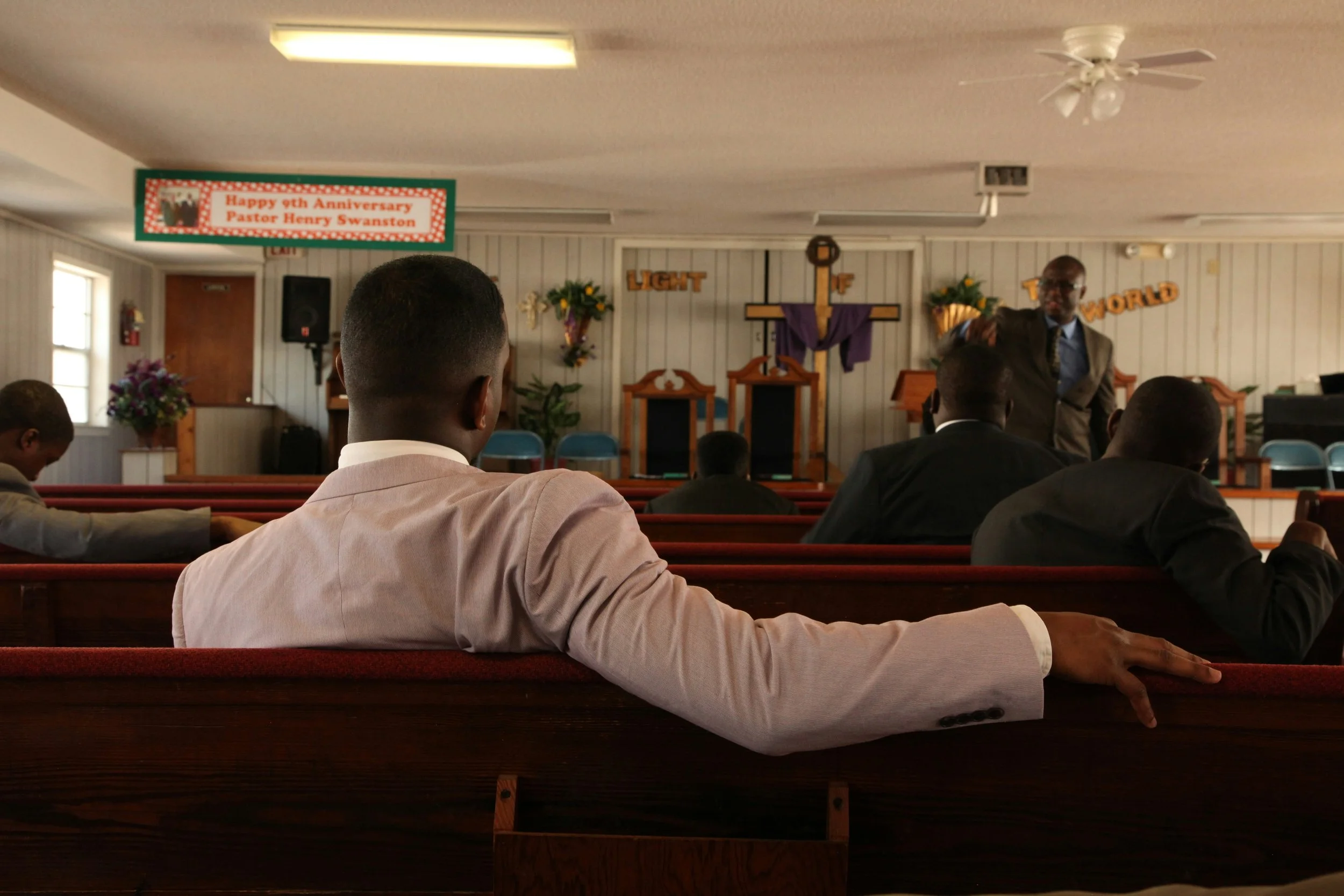
Sunday service captured by Clive Thibela on Unsplash
In 2011, a remark made in passing lodged itself quietly in my thinking and, over time, grew into something far more consequential than I could have anticipated. It came from a friend named Angela during what appeared, at least on the surface, to be an unremarkable planning meeting in a small church setting. We were young then, animated by idealism, convinced that ambition and faith could coexist without apology, and hopeful enough to believe that meaningful change could begin wherever conviction met effort. We lacked resources, but we compensated for that with energy and a sense that what we were building mattered.
The disagreement that day centred on a familiar and seemingly straightforward question: how much should be spent on a youth programme? The leadership had approved a modest budget and defended it with moral reasoning that felt difficult to challenge. Spending beyond the bare essentials, they argued, risked appearing insensitive. Simplicity, restraint, and thrift were framed not merely as practical considerations but as expressions of spiritual integrity. Several of us agreed instinctively. The argument felt reasonable, even righteous. Modesty sounded like wisdom.
Angela, however, saw the matter differently.
Without raising her voice or appealing to emotion, she stated plainly, “Mediocrity is not Christianity.”
The room fell into an uneasy silence, not because her words were aggressive, but because they disrupted a comfortable assumption. At the time, I interpreted her objection as a concern about presentation, perhaps even an insistence on higher production values. Others were quicker to respond, cautioning against extravagance and warning that humility required limits. I said nothing, uncertain of where I stood, yet conscious that something important had been articulated. Long after the meeting ended, the sentence remained.
It took many years for its meaning to become clear.
What Angela was articulating was not a defence of spending, nor an argument for aesthetic polish. She was addressing a deeper tendency within institutions and individuals alike to mistake restraint for virtue without examining what was being restrained. Her concern was not excess, but indifference. Not extravagance, but carelessness. In retrospect, her words challenged the assumption that doing less automatically makes something more moral, or that seriousness of purpose can be measured by how little effort one expends.
This insight extends well beyond religious contexts. Excellence, whether in faith, education, law, or public life, is often misunderstood as elitism or vanity, when in fact it is more accurately described as attentiveness. To do something well is to take it seriously, to acknowledge that it deserves thought, preparation, and respect. It is not about impressing others, but about refusing to treat meaningful work casually. When standards are lowered in the name of humility, what is often lost is not pride, but intention.
Religious traditions have long grappled with this tension. Within Christianity, the call to offer one’s labour fully has never been about perfection or performance, but about responsibility. The familiar exhortation to work with one’s whole heart is less a demand for flawlessness than a rejection of apathy. It suggests that effort carries moral weight, and that how something is done matters, even when recognition is absent.
Somewhere along the way, many communities conflated modesty with mediocrity and caution with virtue. Speed replaced care, minimalism substituted for thoughtfulness, and the language of humility was used to excuse work that was rushed, underdeveloped, or incomplete. What was framed as spiritual restraint often masked a reluctance to invest imagination, time, or responsibility. The result was not simplicity, but stagnation.
This pattern is hardly confined to church settings. It appears in classrooms where curiosity is dulled by convenience, in workplaces where competence is measured by efficiency rather than care, and in public institutions where responsibility is diluted by the desire to avoid risk. We see it when individuals ask what is sufficient rather than what is required, when “good enough” becomes the highest aspiration, and when seriousness is mistaken for severity rather than depth.

Angela understood, perhaps instinctively, that excellence is not the enemy of humility, but one of its expressions. To approach a task with care is not to elevate oneself, but to honour the work itself. Effort, in this sense, is an ethical posture. It signals respect for the people involved, for the purpose at hand, and for the values one claims to hold.
Years later, as a law student, I encounter that sentence in contexts Angela could never have predicted. It resurfaces when the temptation to cut corners presents itself as efficiency, when fatigue encourages minimal compliance rather than engagement, and when preparation feels optional rather than essential. What once sounded like a provocation now functions as a standard against which I measure my own seriousness.
This does not mean that excellence demands obsession or spectacle. It is not synonymous with excess, nor does it require perfectionism. Rather, it calls for intentionality. It asks whether thought has been applied, whether care has been taken, and whether the work reflects the significance we claim it holds. Excellence is visible not in grandeur, but in the quiet details that signal commitment.
There is also a moral urgency to this idea that feels increasingly relevant. A culture that fears trying too hard, that treats visible care as naïveté, and that rewards detachment over dedication gradually lowers its collective standards. Playing safe becomes habitual. Expectations shrink. Responsibility is reduced to obligation rather than embraced as purpose. Yet societies are not sustained by caution alone, nor are meaningful lives built on minimal effort.
Belief, whether religious or secular, ought to expand one’s sense of responsibility rather than diminish it. It should invite seriousness, not indifference, and aspiration rather than retreat. Angela’s statement unsettled a room because it exposed the quiet comfort many find in doing just enough to avoid criticism while avoiding the vulnerability of genuine effort.
I sometimes wonder where Angela is now, and whether she continues to speak with that same calm certainty. She likely has no idea how often her words return to me, nor how they have shaped the way I think about work, faith, and responsibility. Yet they have become a measure I revisit whenever I am tempted to settle for adequacy where excellence is possible.
That day, I remained silent, uncertain of my position. With time, I have come to understand.
Mediocrity is not Christianity, not because excellence earns virtue, but because indifference erodes it. Because care is the opposite of neglect. Because what we build, how we build it, and the seriousness with which we approach our responsibilities reveal far more about our values than our declarations ever could.
If we claim that something matters, our effort ought to reflect that claim. Faith, work, learning, and love all deserve more than leftovers. Excellence, when grounded in humility and purpose, is not indulgence. It is honesty. And honesty, in any belief system, remains the foundation of responsibility.