
The Loneliness of Men: A Crisis Hiding in Plain Sight
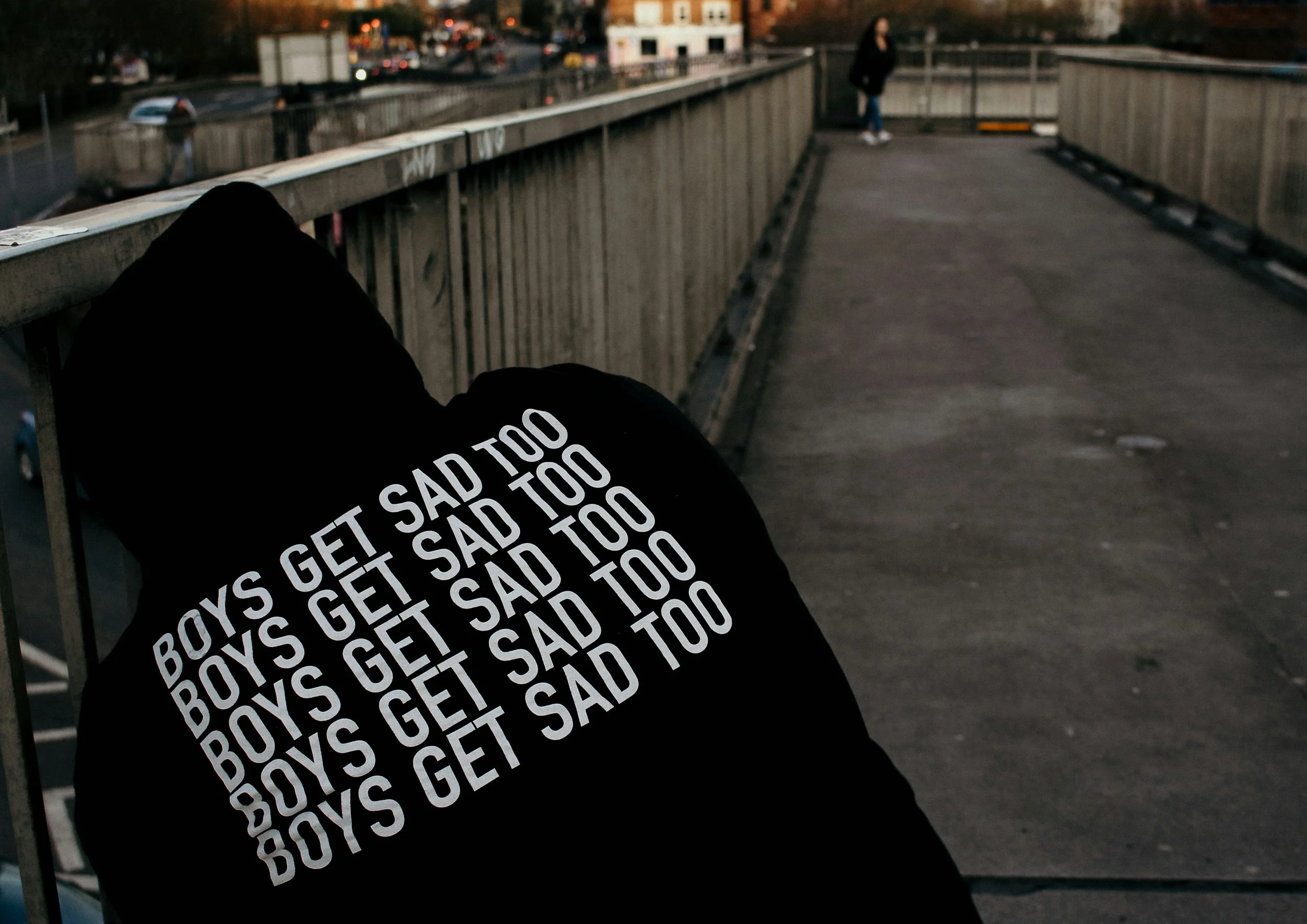
Boys get sad too. Photo credit Unsplash
I first began paying closer attention to the emotional lives of men not through academic research but through a moment I wish I could undo. A friend reached out to me during a difficult period — a message I read, noted, and told myself I would respond to “once things slowed down” but somehow forgot to respond. Perhaps, I imagined there would always be more time. Days later, I learned he had died by suicide. There is no neat way to explain the kind of guilt that follows you after losing someone who asked for help at the exact moment you convinced yourself you were too busy. Nothing prepares you for the realization that a three-minute call can sometimes be the difference between life and death. That experience became the prism through which I now see a broader crisis: men are struggling, often silently, and society still has no coherent language for it.
I was reminded of this again while listening to Oprah’s conversation with Professor Scott Galloway. His description of men’s emotional collapse was worrying; it was a summary of a social emergency we have been reluctant to name. Four in five people who die by suicide are men. Men are significantly more likely to experience homelessness, addiction, and incarceration. In most major cities, single women now outpace single men in income and home ownership. A quarter of men cannot name a best friend. One in seven men cannot name a single friend they could call in a moment of vulnerability.
These are not isolated data points. Together, they outline a pattern showing that men across race, class, age, and geography are becoming emotionally unmoored. The world has changed rapidly, and large numbers of men have not been given new tools to navigate that change. Modern society has rethought gender roles for women with remarkable success which is excellent, but it has not given men an updated understanding of what adulthood, connection, or identity should look like in an era where old certainties have disappeared.
This mismatch has produced a psychological disorientation that many men cannot articulate. They know something feels wrong, but the vocabulary for describing that “wrongness” was never taught to them. They feel exhausted, but not from physical exertion. They feel isolated, but cannot identify anyone they trust enough to admit it to. They feel inadequate, but cannot explain who they believe they are failing. They feel anxious, but have no framework for naming the fear. Without the tools to interpret these signals, they retreat. Retreat becomes a habit. Habit becomes isolation. And isolation for a growing number of men becomes a slow, invisible injury.
Cultural conditioning worsens this problem. In many Black households, emotional restraint is seen as a form of armor against a world that already targets Black men disproportionately. In immigrant communities, men often carry the pressure of being stabilizing forces for families navigating economic and cultural uncertainty. Among white middle-class men, success is often tied to independence and self-management, leaving little room for emotional interdependence. In working-class environments, vulnerability is eclipsed by the daily demands of survival. And among high earners, loneliness often hides behind achievement — alcohol, overwork, or drugs providing a socially acceptable mask.
Different backgrounds, same result: men often do not feel permitted to be human in a full and expressive way. Even basic gestures of affection or closeness are sometimes policed with suspicion — “too soft,” “too emotional,” even “too gay” — as though warmth were a threat to masculinity. The irony is striking: queer men, who have long navigated their own challenges around gender norms, often have more developed emotional skillsets than straight men, yet even they are framed as cautionary tales of “what men should avoid becoming.” This makes genuine connection even harder to achieve.
The absence of friendship is one of the most significant and least discussed elements of this crisis. Historically, men bonded through shared labor, community rituals, and collective responsibilities. Today, those opportunities are rare. Many of us have confined ourselves to tight, curated spaces behind our screens, convincing ourselves that sending reels or memes is a form of communication, as though digital crumbs can replace real conversation. We tell ourselves it counts as connection, when in truth it often shields us from the vulnerability that genuine relationship requires. Adult friendships demand intentionality — something many men were never taught to practice. Men often maintain networks, not bonds; contacts, not confidants. They participate in group chats full of humor but devoid of intimacy. They socialize in ways that avoid personal disclosure. They handle grief by disappearing rather than reaching for the people who could help them carry it.
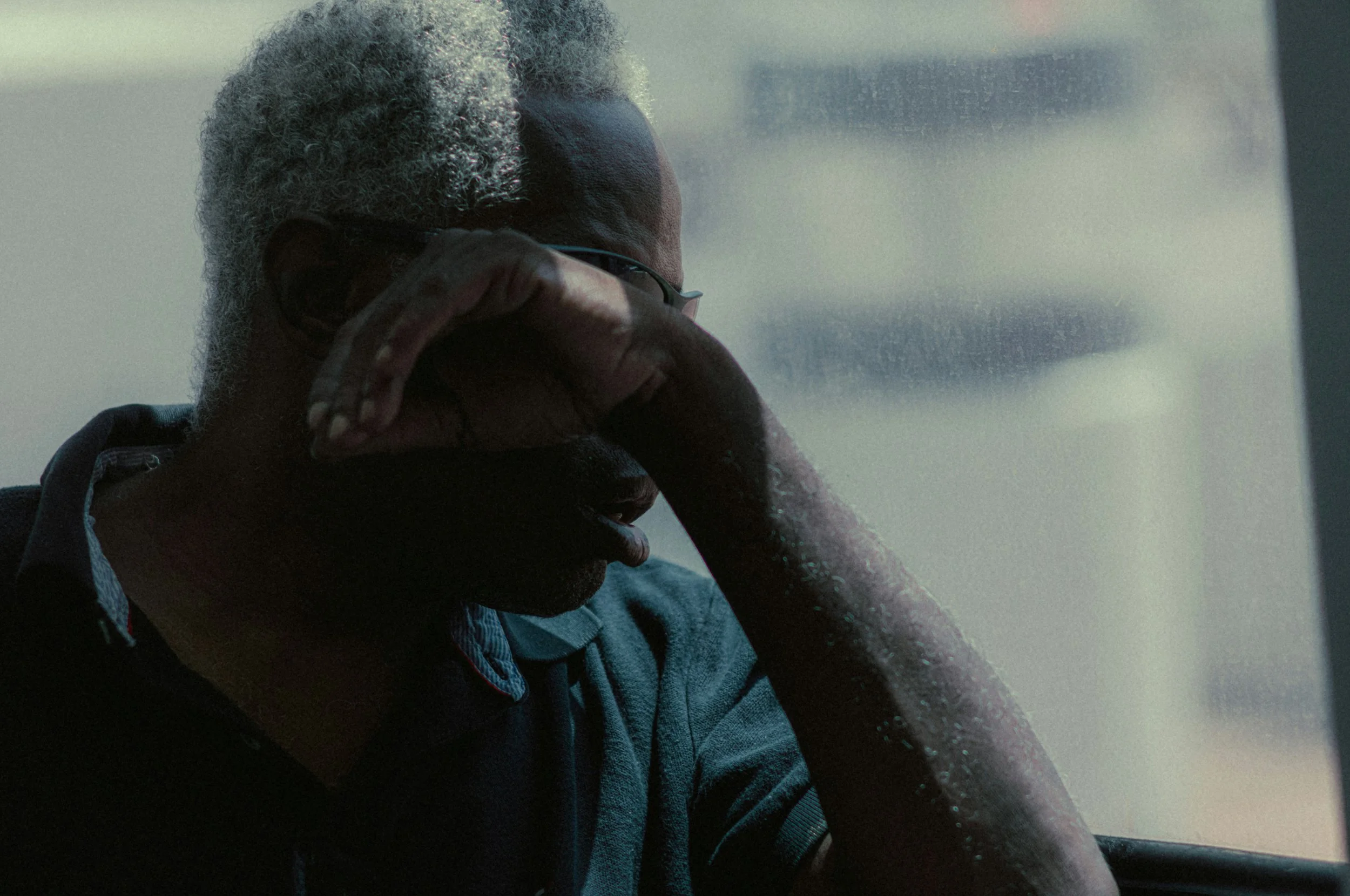
Photo credit Unsplash
The result is what sociologists now refer to as the “male friendship recession” — a widespread collapse of deep male companionship. This recession feeds directly into the loneliness epidemic, which in turn fuels addiction, depression, aggression, and self-destruction. It is impossible to treat men’s mental health without addressing this foundational issue: human beings cannot thrive without connection, and men are increasingly living without it.
It is important here to distinguish between blame and responsibility. Men are not at fault for inheriting a narrow definition of masculinity, but they do bear responsibility for how they respond to it. A man cannot wait for culture to change around him before learning how to participate in his own emotional life. At the same time, society cannot reasonably expect men to reinvent themselves without support. Schools should teach emotional literacy as a core skill. Workplaces should recognize loneliness as a health issue rather than a private inconvenience. Community institutions should create spaces where men can gather in ways not mediated by competition or hierarchy.
My own experience has taught me that loneliness among men does not appear dramatically. It shows up gradually — in cancelled plans, in shorter conversations, in messages left unanswered, in the quiet assumption that no one wants to hear the truth anyway. It appears in the man who works endlessly because he does not know where else to put his energy. It appears in the man who drinks more than he intends because it numbs the ache he cannot name. It appears in the man who isolates himself emotionally even when surrounded by people. You learn, over time, that the most confident men are often the most alone.
We need to talk about this crisis not because men deserve more attention, but because humanity cannot function sustainably while half its population is emotionally stranded. Societies with large numbers of disconnected men become volatile, unstable, and resentful. Families fracture. Communities weaken. Political extremism thrives. Emotional neglect in men is not a private matter, it is a public danger.
The path forward must begin with honesty. Men need to be taught and reminded that vulnerability is not a performance or a liability. It is a necessary condition for connection. And connection is not optional; it is the infrastructure of a stable life. The path forward has to begin much earlier than adulthood. It begins with mothers who tell their sons, without hesitation or discomfort, that they love them. It begins with fathers who sit with their boys and speak honestly about fear, disappointment, confusion, and the full vocabulary of human emotion — not just discipline and achievement. If children do not learn tenderness at home, they grow into men who fear it everywhere else. And that fear becomes the barrier that isolates them, sometimes for the rest of their lives.
But the work cannot stop in childhood. Men must also relearn what connection means. Vulnerability is not a performance, and it is not a liability. It is the only reliable doorway into real companionship. And connection is not decorative, it is structurally the emotional framework of a stable and meaningful life. Men need to allow themselves to be human in the presence of other men. Talk to a friend and allow your guard to fall for a moment. Normalize telling another man that he looks good, that you appreciate him, that something he did inspired you. Encourage each other without sarcasm. Make room for evenings together that aren’t just built around distraction, but around conversation not lectures, not competition, but honesty. Hold a friend’s hand when he is trembling. Pray together if that is your language. Sit in silence together if that is all you can manage. What matters is that you show up as a person, not a performance.
None of this makes a man weaker. It makes him anchored, seen, protected. We are living in a time when men are breaking under the weight of silence, and pretending it is strength. We did not create the conditions that taught us to hide, flatten, or harden ourselves, but we are responsible for refusing to pass it on. This crisis will not be solved by grand gestures, it will be solved by small, consistent acts of humanity. One conversation. One moment of honesty. One man choosing connection over pride.
I often think back to my friend, whose final messages I never answered. I replay the timing, the tone, the missed opportunity. He was just a human being reaching out, and another human being delaying. That is how loneliness kills: quietly, incrementally, and without spectacle. It does not always arrive with warnings. Sometimes it arrives in the form of silence, and sometimes it ends that way too.