
The Life Less Valued
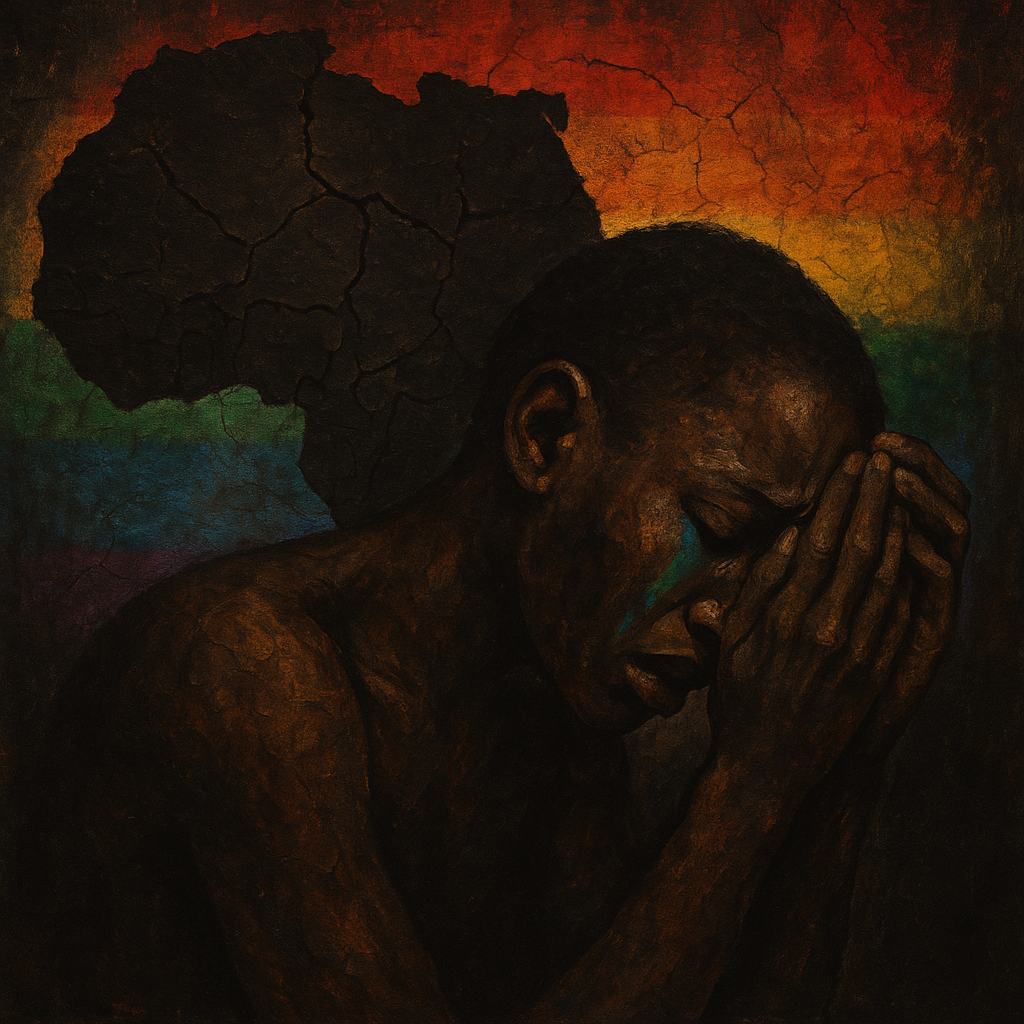
Image generated using AI for illustrative purposes.
I got emotional reading The Guardian’s story about Delali, a 25-year-old Ghanaian-Nigerian chef who was beaten, filmed, and humiliated after being lured through a dating app in Accra. Perhaps I am too emotional or perhaps I have read too many of these stories. Each one begins with the simple human desire for connection and ends with violence, shame, or death.
And then, just days later, I read another story this time from Nigeria. Hilary, a young man from Port Harcourt, was deceived into a meeting under false pretenses, beaten, and thrown from a two-storey building. He fought for his life but succumbed to his injuries. His death marks the second kito-related killing in two weeks.
Two countries. Two names. The same cruelty.
It is easy to think of these as separate incidents random crimes in different places. But they are connected by the same moral climate that has made it open season on queer Africans. The same laws that criminalize identity. The same sermons that condemn difference. The same silence that makes hatred ordinary.
In Ghana, Parliament debates a “family values” bill while blackmail rings hunt queer people through dating apps. In Nigeria, the 2014 Same-Sex Marriage Prohibition Act still looms like a shadow over every attempt at intimacy. In both countries, people are dying not because they broke the law, but because their very existence offends our idea of normal.
“We like to say that Africa is a place of community, of warmth, of ubuntu. But what kind of community feeds on fear? What kind of warmth drives people into hiding? We have inherited laws from colonial masters who once declared our ancestors “uncivilized,” and now we use those same laws to declare others unworthy of belonging.” — Ben Kwadwo Graham
I cannot read these stories without feeling grief and shame. Grief for lives like Delali’s and Hilary’s, who only wanted to love and be loved. Shame because both were betrayed not just by criminals, but by the societies that made those criminals possible. In Ghana and Nigeria, hatred has become public policy. Violence has become a performance of virtue.
The Guardian reported that attacks on LGBTQ+ people in Ghana tripled in 2024 and continue to rise. In Nigeria, human rights groups have documented similar spikes in extortion, blackmail, and murder. Yet, for all the outrage online, nothing changes. Our leaders issue statements about “preserving morality” while citizens bleed in silence. This is not morality; it is moral decay dressed in religious language.
We cannot keep pretending that faith justifies cruelty. We cannot keep mistaking persecution for protection. When people are beaten to death for who they are, and when entire congregations fall silent in the face of such horror, we should question what kind of god we truly worship.
I know what many will say: that these issues are foreign, that the West is imposing its values. But what could be more African than compassion? What could be more Christian, more Islamic, more human than mercy? Violence was never part of our heritage. It was imported, codified, and baptized in our institutions.
The danger now is not only in the attacks themselves, but in the fatigue that follows them. Each new story shocks us for a moment, then fades into the background noise of everyday injustice. We scroll, sigh, and move on. We are becoming desensitized to our own cruelty.
Hilary’s death in Port Harcourt should stop us. Delali’s ordeal in Accra should shame us. These are not headlines; they are lives—lives that once held laughter, ambition, ordinary dreams. Their deaths are not just tragedies; they are indictments of all of us who looked away. We must decide whether we are building nations or excuses. Whether we believe in freedom or only in the illusion of it. Whether our faith calls us to love or merely to police. I am tired of reading these stories. Tired of counting bodies while politicians debate love. Tired of seeing empathy treated as weakness. But exhaustion is a luxury the dead do not have.
So I will keep feeling too much. Because to stop feeling would be to accept this horror as normal. And nothing about it should ever be normal.
It could be them today and me tomorrow.
The same streets. The same country. The same silence.
And if that day ever comes, maybe no one will notice -because by then, silence will have learned to speak for us all.