
Dear Mum: The Letter I Have Been Trying to Write Since You Left
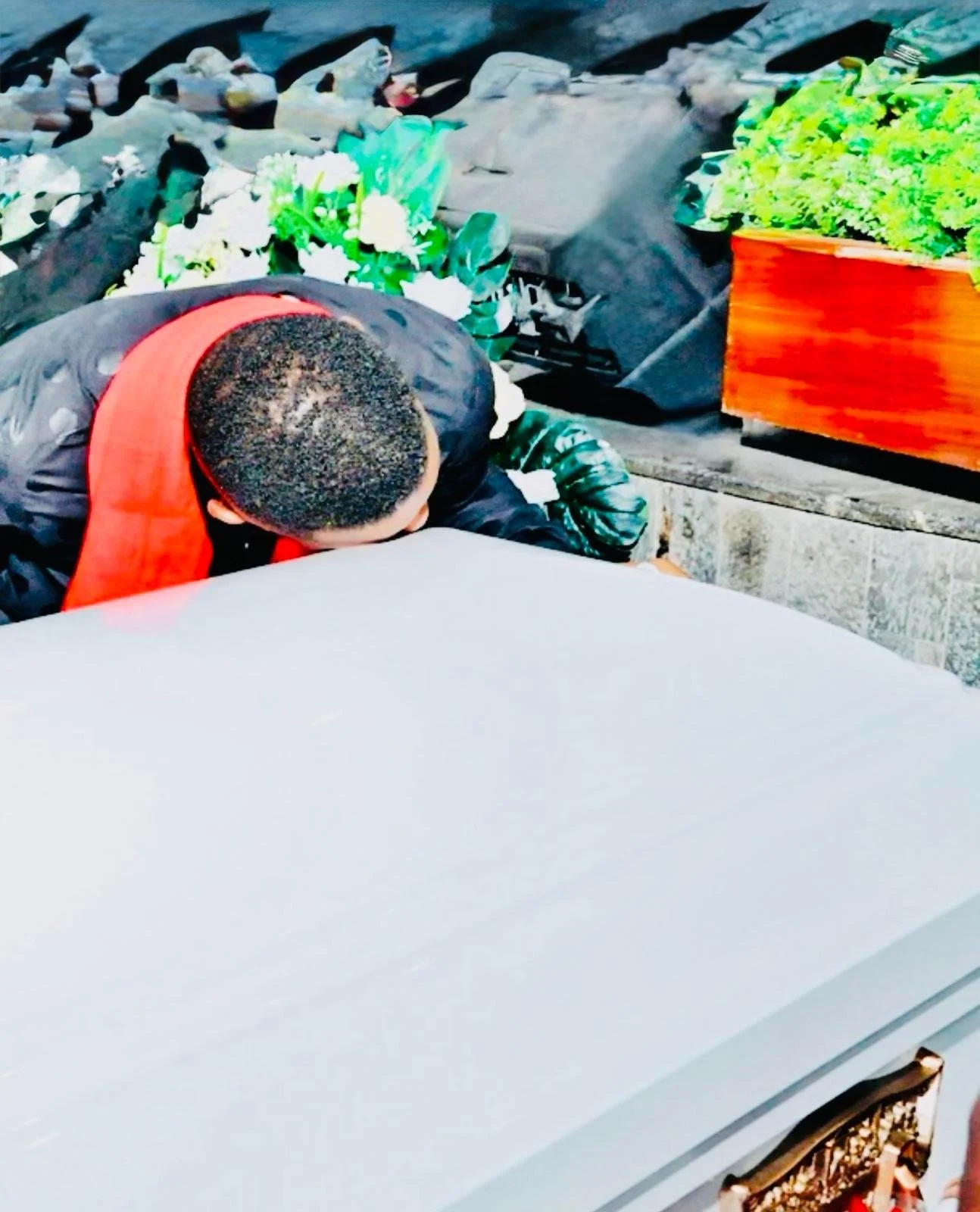
Photo credit- Benjamin Graham
If I were sitting alone in a quiet room with only a pen and enough time, perhaps I would write this differently. I have started and abandoned this letter so many times than I could count. Nothing ever felt complete. Nothing ever felt tidy. But grief rarely gives us neat sentences, so what follows is simply what I have — the truest version I can manage.
Your death began on an ordinary morning. I was at my desk, a cup of tea cooling beside me. Nothing signaled that my world was about to tilt. Then the phone rang. The voice was familiar, but the words were impossible to absorb. Perhaps, it was a scam so I hung up. The phone rang again. And again. On the third call, I answered.
“We need you to come view your mum’s body at the hospital.”
The sentence rearranged me in a second. It split my life into two parts: the time when you were here, and the time after.
In the months that followed, I tried to move on. I tried to hide it, to act as if nothing had happened. I tried to toughen up the way men are told to, folding my pain into smaller and smaller spaces as though it could be contained by sheer will. But grief is not a visitor you can dismiss politely when you feel strong enough. It does not care for masks or bravado. It lingers in the corners of the day and gathers in the spaces you least expect. Nights that once passed quietly became long and unsettled. Tasks that were once simple became impossible to complete without pausing to breathe. Even laughter felt fragile, like something borrowed rather than owned, as if joy had become a costume that no longer fit. I kept trying to outrun the heaviness through work, work outs, through distraction, but grief moved with me, not behind me. It travelled in my footsteps, sat beside me in silence, and reminded me that sorrow, once awakened, does not slip quietly back to sleep.
And somewhere inside that struggle, I began to notice something I had never seen so clearly: grief was everywhere. Not just mine. Not just about death. It is for anyone who has ever lost something they wished they could keep — a person, a home, a dream, a relationship, a version of themselves. The world feels unbearably heavy these days. Someone in Accra is grieving a job. Someone in London is grieving a marriage. Someone in Lagos is grieving the idea of safety. Someone in New York is grieving the loss of a home. Someone somewhere is grieving quietly because the world has told them they have no right to feel this broken over something others might dismiss.
We grieve many things, and we grieve them differently.
My grief took the shape of silence. I drove in circles just to avoid reaching a home you were no longer in. Some nights the loneliness felt too large, so I’d call friends under the guise of catching up. They never knew the calls were less about conversation and more about anchoring myself. I needed another voice in the room, even if they spoke about trivial things. Silence, once comforting, became a sound too sharp to bear.
Others grieve by working endlessly, filling every hour so they don’t have to sit with their own thoughts. Some people withdraw. Some lash out. Some eat too little; some eat too much. Some pretend to be fine because the world needs them to be. Every grief has its own language, even when we cannot speak it.
And then there are the small inheritances — the memories that return without warning. For me, it is your perfume, the clink of your earrings, the gentle way you would tilt your head when I helped with your make up - eyeliner, lipstick and the blush. For someone else, it might be a song that carries the outline of a person they once loved. For another, the way the air smells before rain, reminding them of a place they can never return to.
Grief has many doorways.
After you died, brightness felt wrong. I wore darker clothes and I still do. My voice softened. Everything inside me moved slowly, as if time itself had lost its shape. And then, one day, I found Anderson Cooper’s podcast All There Is. Not because I was searching for comfort, but because grief seems to lead us to whatever might help us breathe again.
Listening to him speak about the people he’s lost made me realise something: grief is not only about death. It is about love interrupted. Love broken open. Love with nowhere to go. People write to that podcast not because their stories are identical, but because grief, in all its forms, asks the same things of us — patience, honesty, and the courage to sit with what hurts.

The Late Madam Wilhelmina Boye
So this letter to you, Mum, has become a letter to anyone who is grieving something quietly.
If your heart feels heavy, you are not weak.
If your sadness returns when life seems stable, you are not failing.
If you miss someone who hurt you, or someone who left you, or someone who died long ago, you are not going backwards.
Grief does not measure time the way calendars do.
It is normal to feel undone.
It is normal to feel angry.
It is normal to feel nothing at all.
It is normal to laugh unexpectedly and feel guilty for it.
It is normal not to know what normal even means anymore.
There is no wrong way to grieve.
Mum on your anniversary again, I find myself not thinking about the big moments, but the small ones: the way you adjusted your scarf before church, the way you said my name as if it meant something extraordinary, the way your hand found mine when the world felt uncertain. I have learned that the smallest memories carry the greatest weight.
You are gone, but the ways you shaped me are not. They live quietly in how I move through the world, how I love, how I speak, how I hope.
I do not know if grief ever ends, but I am learning that it doesn’t have to. It’s not a problem to solve. It’s a companion to learn. Missing you now feels less like breaking and more like remembering. It feels like honoring the parts of me you helped build. If grief is the price of love, then this ache is simply the cost of having been loved deeply.
And perhaps for all of us who are hurting — that is enough reason to keep going. Grief does not ask us to be brave; it only asks us to keep living in the aftermath. And so, if you find yourself saying a prayer tonight, say one for me too — your grieving child, still learning how to walk through a world you are no longer in.