

DVLA Publishes New Vehicle Registration and Inspection Fees Nationwide

Julius Neequaye Kotey Chief Executive Officer (CEO) of the Driver and Vehicle Licensing Authority (DVLA
Accra, Ghana- Accra’s roads are already crowded with impatient drivers inching forward under the sun, commercial vehicles negotiating space, and private motorists calculating the next unavoidable expense. This week, those calculations shifted again.
The Driver and Vehicle Licensing Authority (DVLA) has released a comprehensive list of approved rates for vehicle registration and related services, outlining new costs across inspections, registrations, conversions, renewals, and specialized services. The updated price structure affects virtually every category of road user, from motorcyclists and private car owners to haulage operators and construction firms.
According to the DVLA, the revised fees are part of a standardized national pricing framework meant to bring clarity, uniformity, and transparency to vehicle services across its regular and premium centers. The authority argues that the rates reflect operational realities inspection infrastructure, digital systems, logistics, and service delivery costs that have steadily increased over time.
But on the streets, the announcement lands differently.
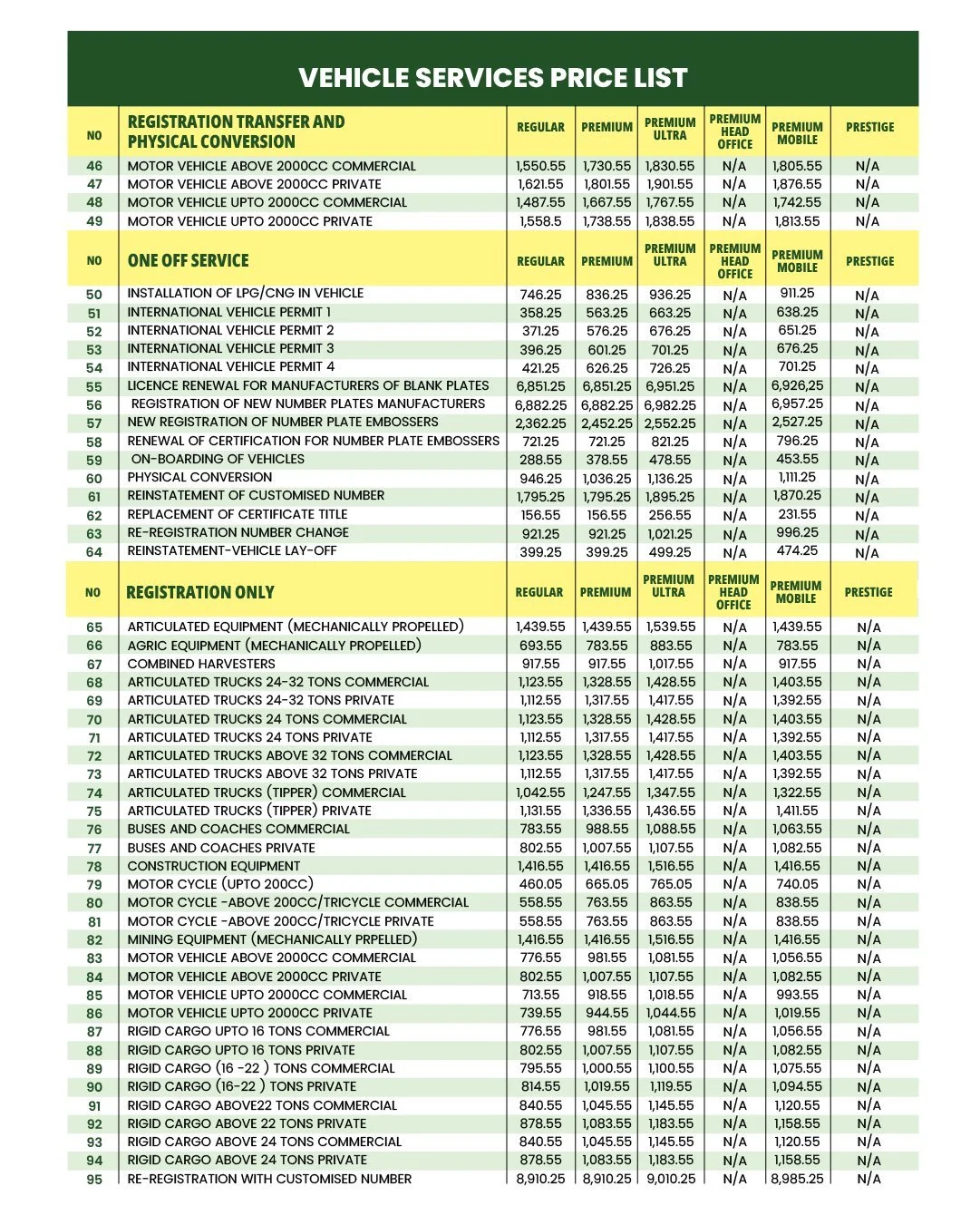
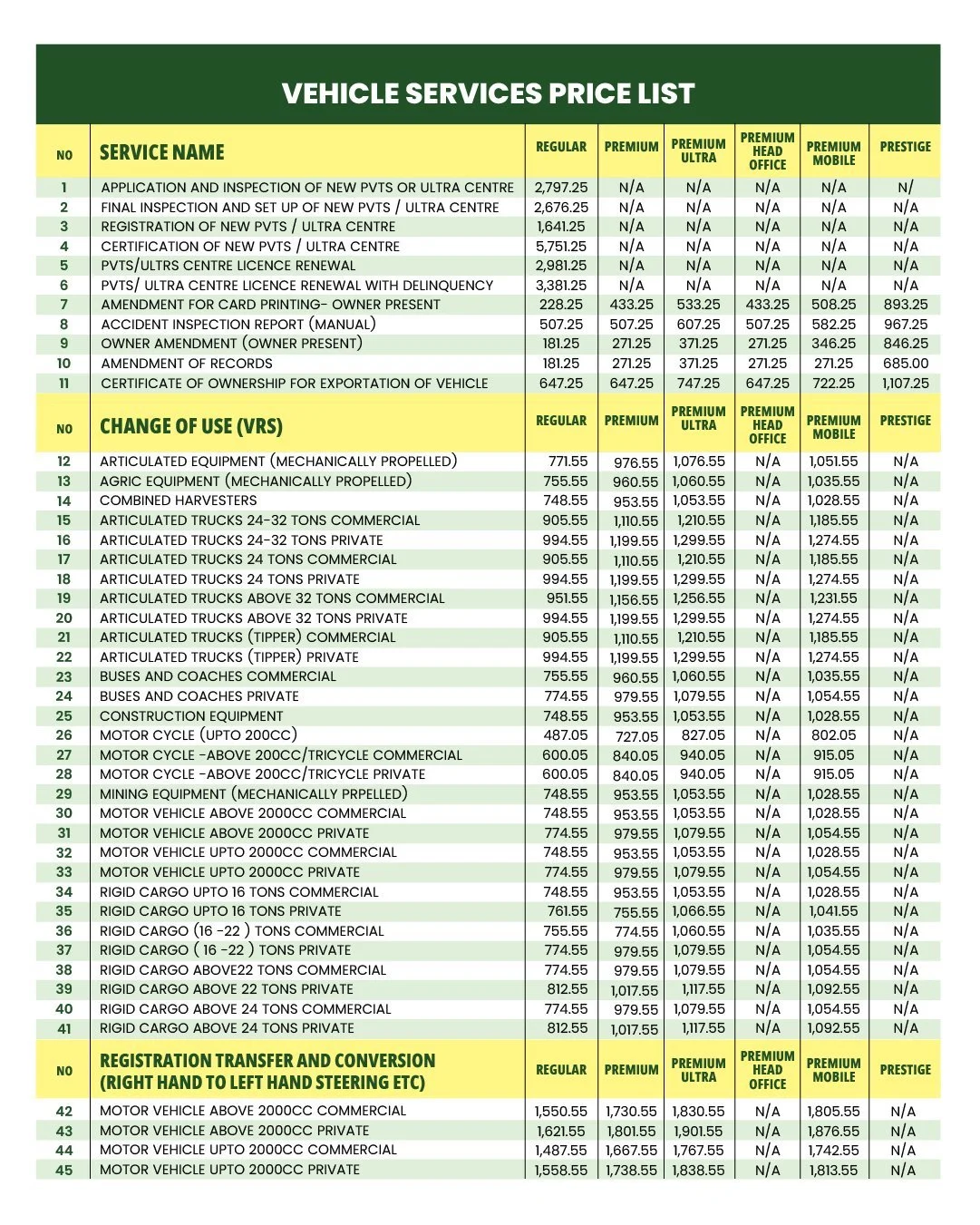
For commercial drivers and fleet operators, the numbers represent more than administrative adjustments. Registration for articulated trucks, rigid cargo vehicles, and buses now runs into four figures, depending on weight class and service tier. Even motorcycles often the most affordable entry point into mobility are not exempt, with fees varying sharply based on engine capacity and commercial use.
Private motorists, meanwhile, face higher costs for routine services such as physical conversions, re-registration, certificate replacements, and customized number reinstatements. Premium and mobile services, while offering speed and convenience, come at a significant additional cost sometimes hundreds of cedis more than standard processing.
DVLA officials maintain that the pricing structure introduces predictability into a system that has long been criticized for inconsistencies, middlemen, and unofficial charges. By publishing an approved national rate card, the Authority says it is closing gaps that previously allowed for exploitation and confusion.
Yet the timing of the fee hike draws immediate attention.
Ghanaian households are already grappling with rising fuel prices, insurance costs, and vehicle maintenance expenses in an economic climate marked by inflation and wage pressures. For commercial drivers whose earnings fluctuate daily, any increase however justified on paper reverberates through transport fares, delivery costs, and ultimately consumer prices.
The DVLA has urged the public to familiarize themselves with the official rate list and report any deviations or unauthorized charges. In doing so, the Authority positions transparency as both a shield and a remedy placing responsibility not only on the institution but also on citizens to demand compliance.
For many drivers, affordability is the key issue. As every cedi matters, new DVLA rates stand as another financial hurdle on the road to legal driving.
Read Also