
Ghana’s Inflation Falls to 3.8% in January 2026 – GSS Report

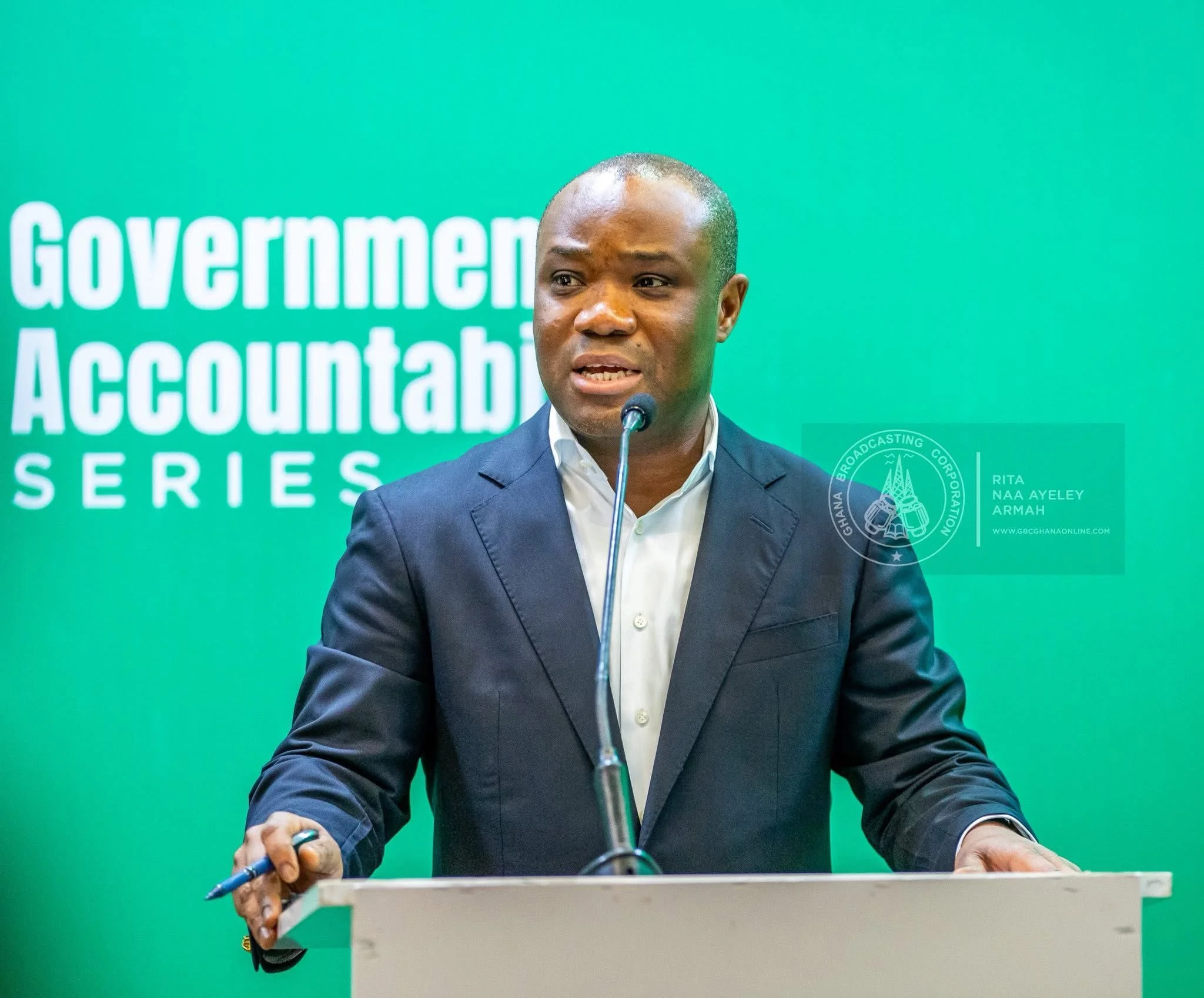
Government Statistician Dr Alhassan Iddrisu delivering an opening remark on Jan 23, 2026. Photo credit GSS
Accra, Ghana- Ghana’s inflation rate has fallen to its lowest level in more than four years, signaling growing price stability for households and businesses, according to the latest Consumer Price Index (CPI) report released by the Ghana Statistical Service.
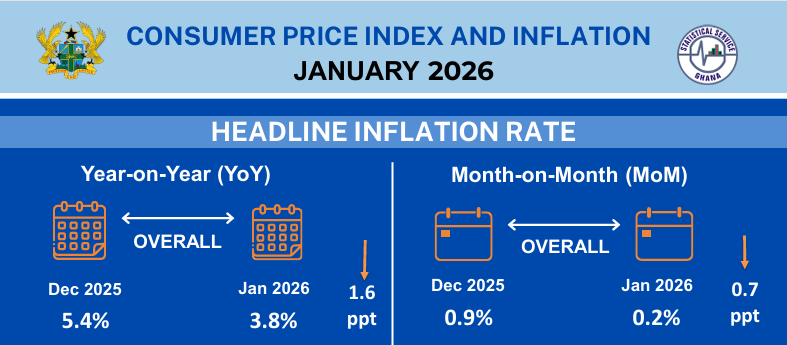
Presenting the January 2026 inflation figures in Accra on February 4, Government Statistician Dr. Alhassan Iddrisu announced that year-on-year inflation dropped to 3.8 percent, down from 5.4 percent in December 2025 and far below the 23.5 percent recorded in January 2025. This marks the 13th consecutive month of decline in inflation and the lowest rate since Ghana rebased its inflation data in 2021.
Dr. Iddrisu said the steady fall in inflation reflects a sustained shift toward macroeconomic stability, noting that overall prices increased by only 0.2 percent between December 2025 and January 2026. “The consistent slowdown in inflation shows that price pressures are easing across most sectors of the economy,” he explained.
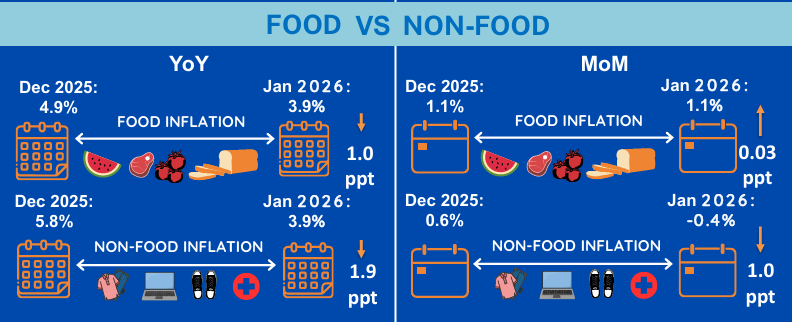
Food inflation, which has been a major driver of rising living costs in recent years, also declined. Year-on-year food inflation fell to 3.9 percent in January 2026, down from 4.9 percent in December 2025. Month-on-month, however, food prices rose slightly by 1.1 percent, driven by increases in selected food items.
Non-food inflation also eased significantly, falling from 5.8 percent in December 2025 to 3.9 percent in January 2026. On a monthly basis, non-food prices actually declined by 0.4 percent, offering relief to consumers in categories such as clothing, utilities, and household services.
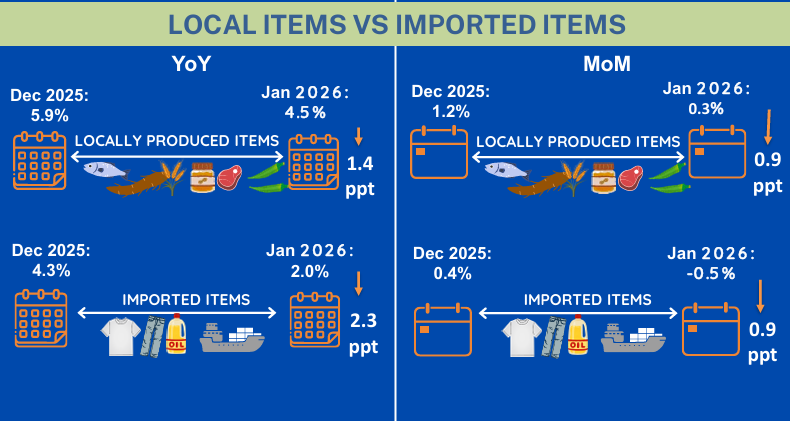
The report further showed that inflation for locally produced goods dropped from 5.9 percent to 4.5 percent, while inflation for imported goods declined sharply from 4.3 percent to 2.0 percent. Goods inflation slowed to 3.6 percent, while services inflation eased slightly to 4.0 percent, highlighting broad-based moderation in price increases.
Despite the national improvement, the GSS warned that inflation remains uneven across regions. The North East Region recorded the highest inflation rate at 11.2 percent, while the Savannah Region recorded the lowest at -2.6 percent, indicating falling prices in some areas. Greater Accra and Ashanti Regions remained the largest contributors to national inflation due to their population size and market activity.
Key drivers of inflation in January included items such as charcoal, plantain, smoked herrings, cinema and cultural services, ginger, vegetable oil, fish, hotel accommodation, tomato paste, and cooked rice. At the same time, prices of items such as garden eggs, tomatoes, pawpaw, okro, cabbage, and maize declined significantly, helping to slow overall inflation.
Dr. Iddrisu attributed the downward trend partly to improved supply conditions and reduced pressure from transport and imported goods, while noting that agriculture remains seasonal and vulnerable to regional price swings.
The GSS described the current inflation trend as a positive development for households, businesses, and policymakers. It advised households to plan budgets with greater confidence, prioritize essential spending, and save where possible. Businesses were encouraged to invest in efficiency and strengthen local supply chains, while government was urged to sustain fiscal discipline and continue efforts to stabilize food prices through investments in storage, irrigation, transport, and market access.
“The sustained decline in inflation gives room for better planning and economic recovery, but regional disparities and food price volatility must still be addressed,” Dr. Iddrisu cautioned.
The January 2026 CPI release forms part of the Ghana Statistical Service’s ongoing effort to provide timely data to guide economic decision-making. The Service noted that inflation data are compiled from prices of 307 items collected from over 8,300 outlets across 57 markets nationwide.
With inflation now at its lowest point in years, the latest figures offer cautious optimism that Ghana’s economy is moving toward greater stability after a prolonged period of high price pressures.
Read Also