

Cedi Trades at ¢11.50 to the Dollar in Latest Bank of Ghana Rates
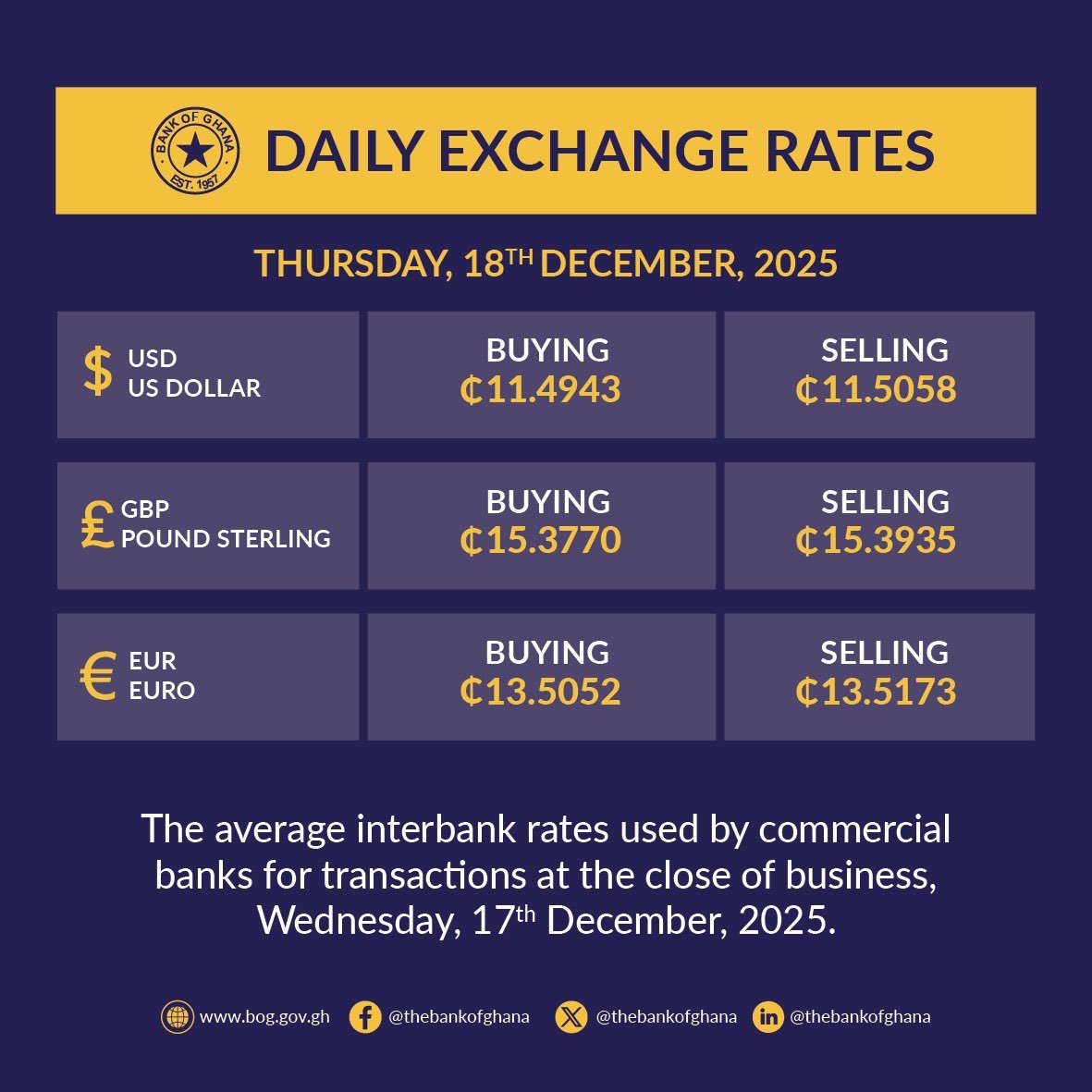
Ghana cedis trading against major foreign currencies on Dec 18 shared by the Bank of Ghana.
Accra, Ghana- The Ghanaian cedi traded at an average selling rate of ¢11.5058 to the US dollar on Thursday, December 18, 2025, according to the latest daily exchange rates released by the Bank of Ghana.
The central bank’s figures show the buying rate for the US dollar stood at ¢11.4943, reflecting the average interbank rates used by commercial banks at the close of business on Wednesday, December 17, 2025.
For other major currencies, the British pound sterling was quoted at a buying rate of ¢15.3770 and a selling rate of ¢15.3935, while the euro traded at a buying rate of ¢13.5052 and a selling rate of ¢13.5173.
The Bank of Ghana explained that the rates represent average interbank exchange rates used by commercial banks and may differ slightly from rates offered to customers depending on transaction type and market conditions.
The daily exchange-rate update is part of the central bank’s efforts to promote transparency and provide guidance to businesses, traders, and the general public on currency movements.
Read Also
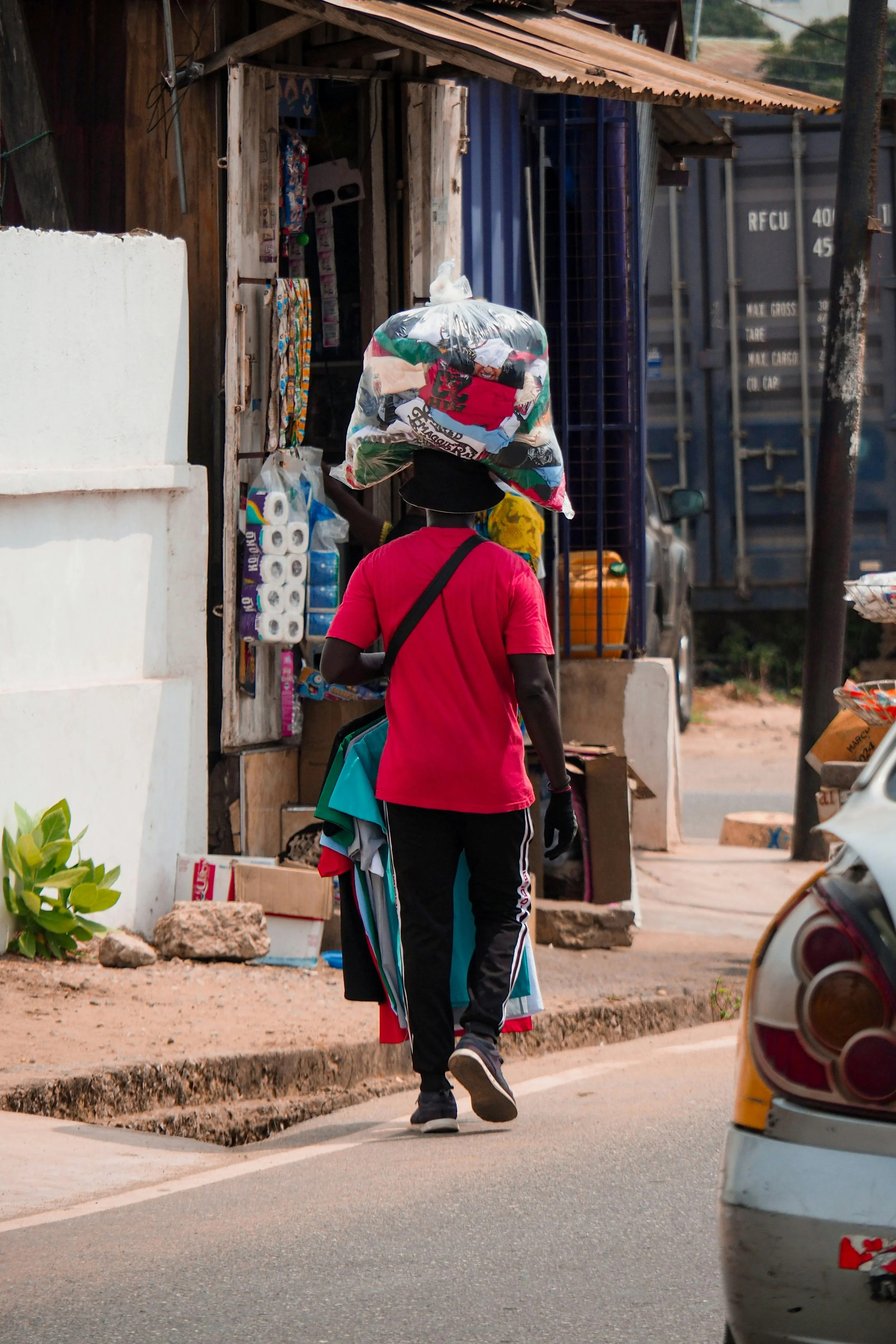
Ghana’s informal economy is larger than many think. New data shows how mobile and open-space businesses—dominated by women and youth—are powering livelihoods across the country.
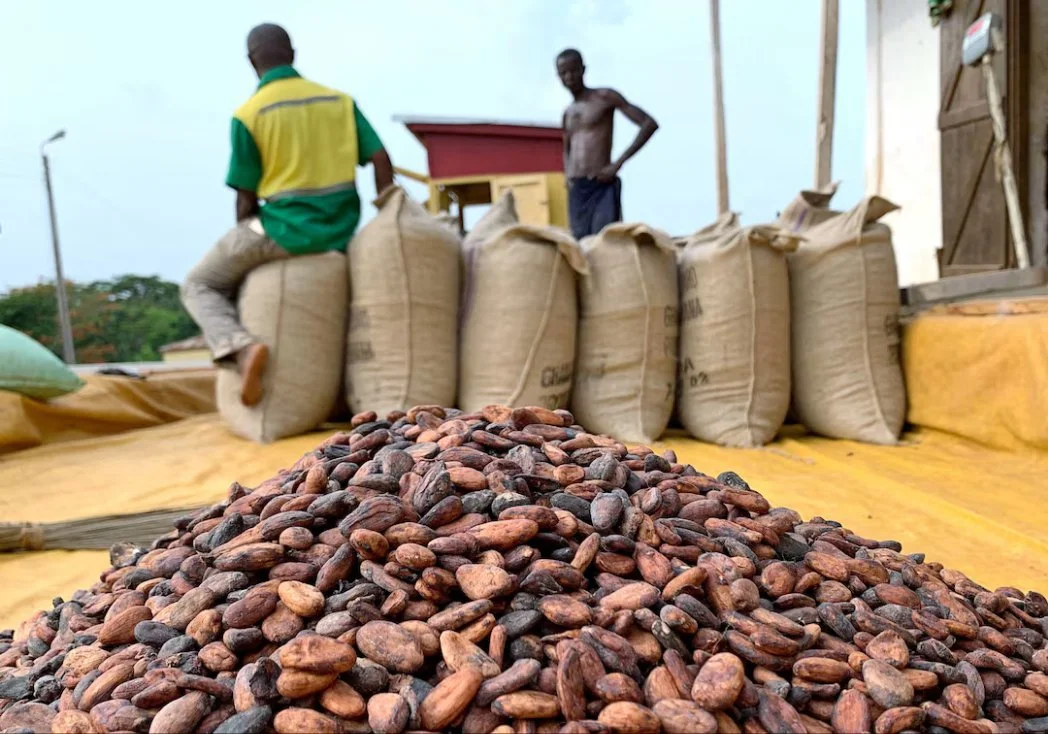
Ghana revises cocoa producer price to GHS41,392 per tonne after global prices fall from US$7,200 to US$4,100, citing liquidity and sustainability concerns.
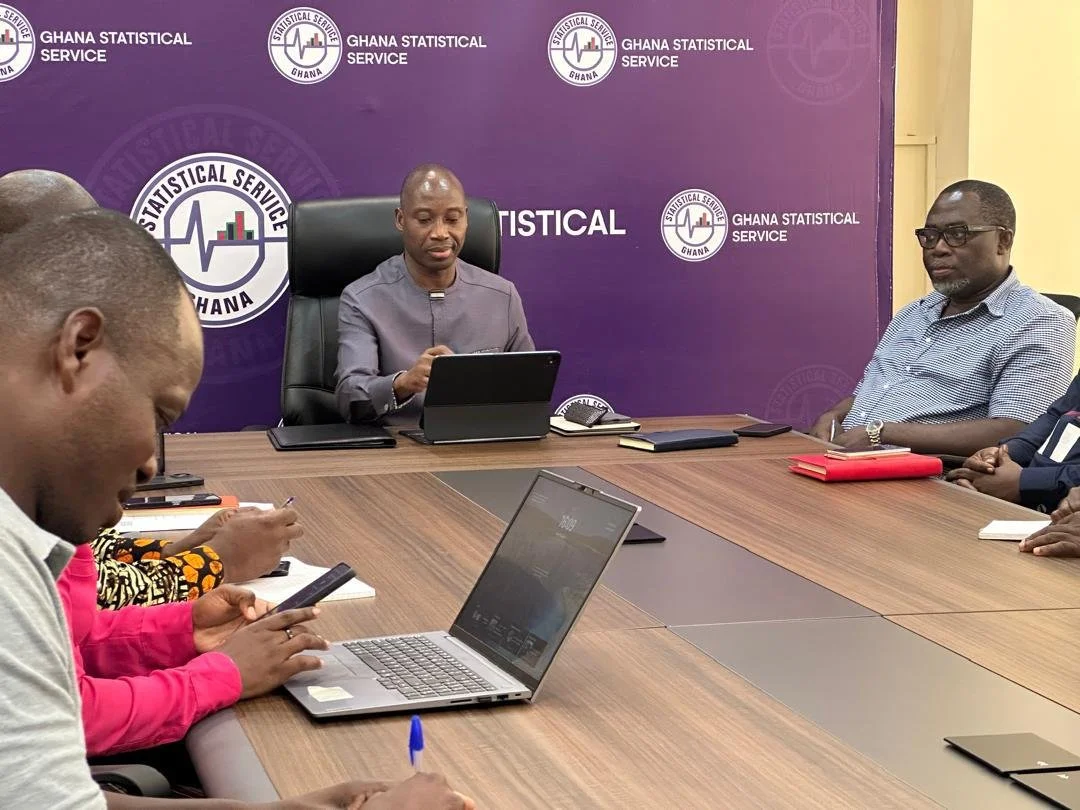
Ghana’s economic activity expanded by 4.2% in November 2025, driven largely by strong growth in the services sector, according to the latest MIEG report from the Ghana Statistical Service.

Bank of Ghana Governor Dr. Johnson Pandit Asiama launches the Bank Listing Project, citing GH¢100bn pension assets and calling for stronger transparency and market discipline.
Upper West, North East and Volta record highest food insecurity levels as Ghana’s national rate falls to 38.1%, with education emerging as a key protective factor.

COCOBOD CEO Randy Abbey says he inherited GH¢3.8bn negative equity, GH¢26bn road exposure and $48m procurement obligations at the cocoa regulator.
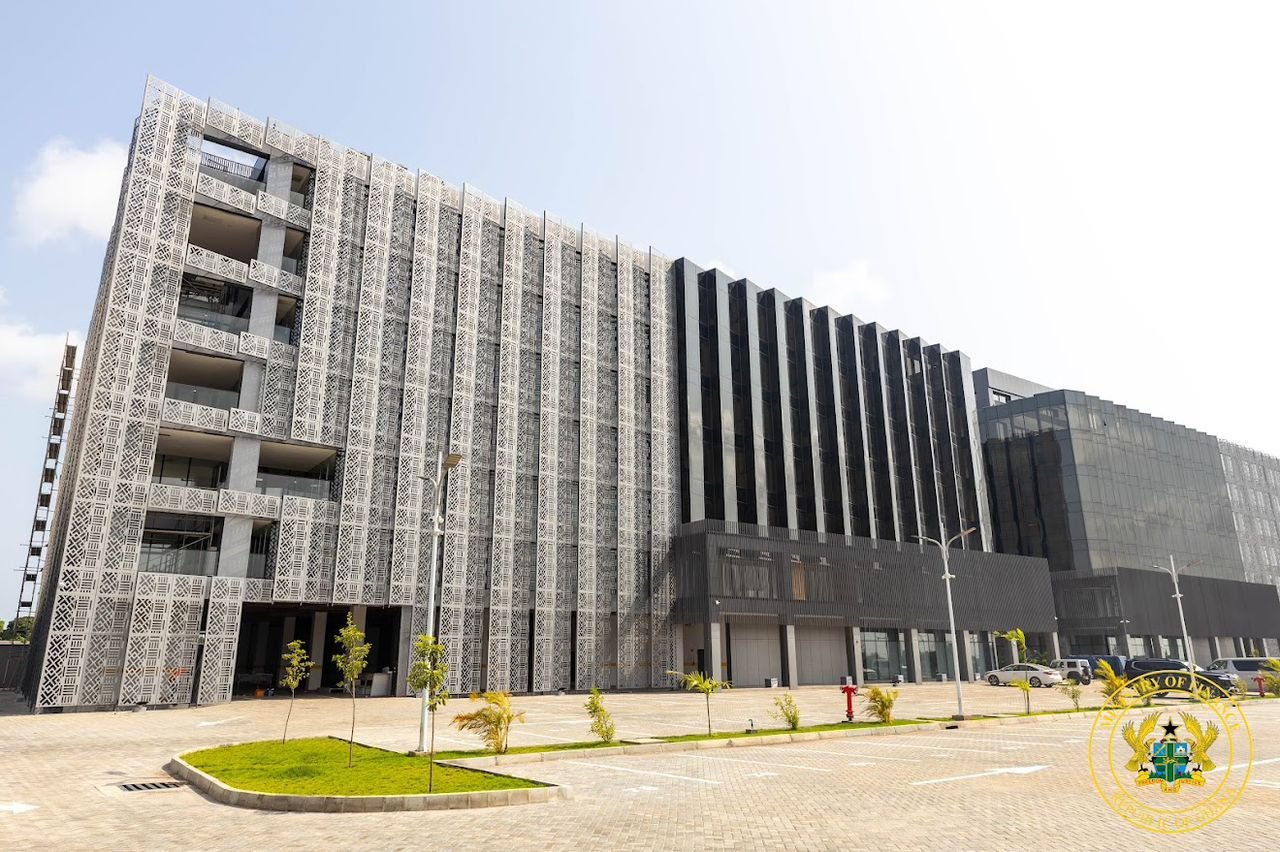
Ghana’s Ministry of Finance has officially relocated its offices to Kanda in Accra, with full operations commencing on February 9, 2026. Here’s what you need to know.

Ghana’s DVLA has released a full list of approved vehicle service rates, affecting registration, inspections, and conversions nationwide. Here’s what drivers need to know.
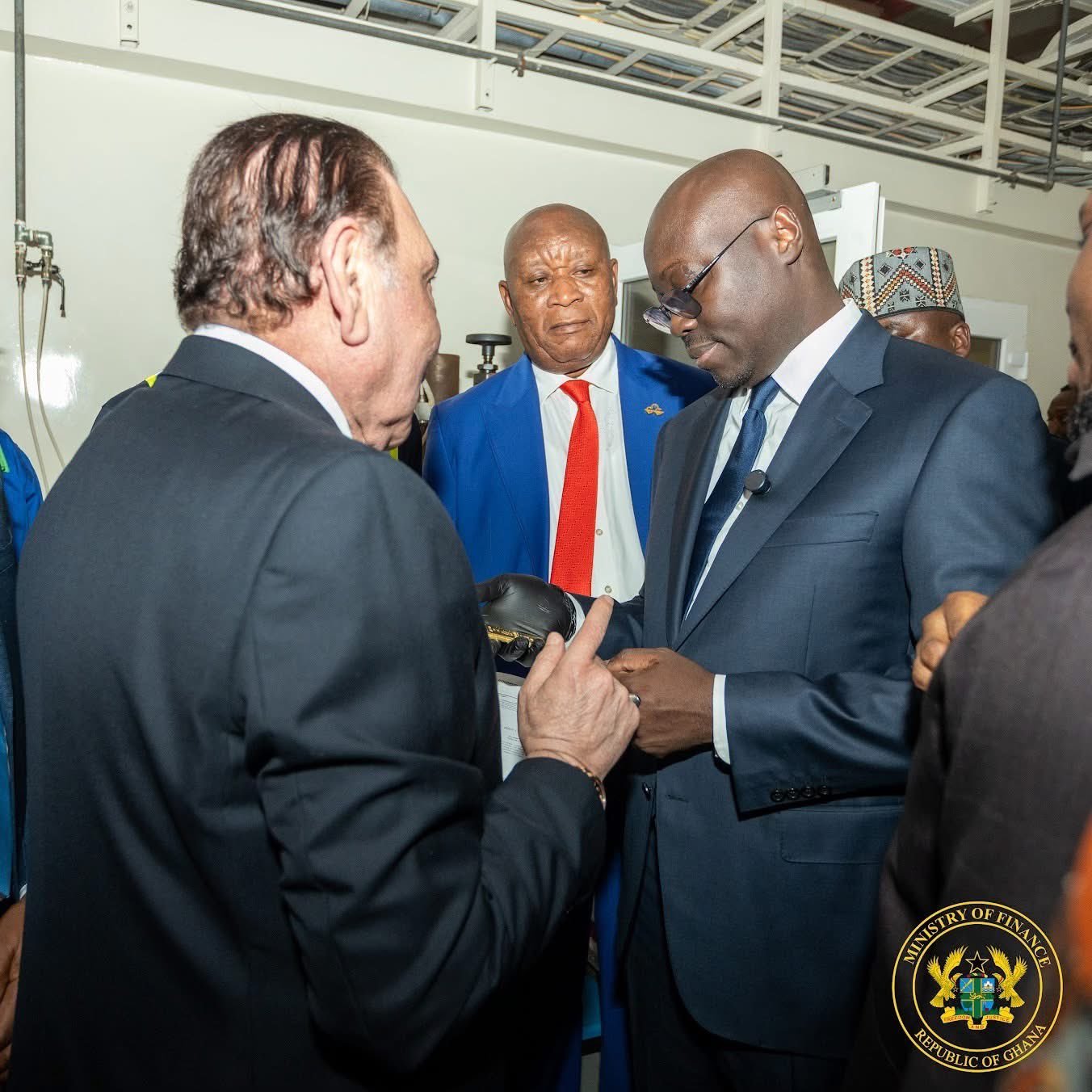
Finance Minister Cassiel Ato Forson says Ghana’s Gold Coast Refinery is now refining one ton of gold weekly, boosting local value addition and jobs.
Ghana’s inflation rate fell to 3.8% in January 2026, its lowest in four years, as food and non-food prices eased nationwide, according to GSS data.

Bank of Ghana Governor Dr. Johnson Asiama says inflation fell to 5.4% and reserves rose to $13.8bn as policymakers consider a cautious path for 2026.
The Institute for Energy Security says Ghana’s fuel price floor protects fair competition and long-term stability, responding to calls for lower petrol prices.
Government says the $1.4bn energy-sector payment has stabilized power supply, restored liquidity, and prevented a return of widespread outages.

New GSS data shows a 3.8% jump in economic activity driven mainly by services and manufacturing. Agriculture also ticked up slightly. Full report breaks down where the growth is coming from and what comes next.
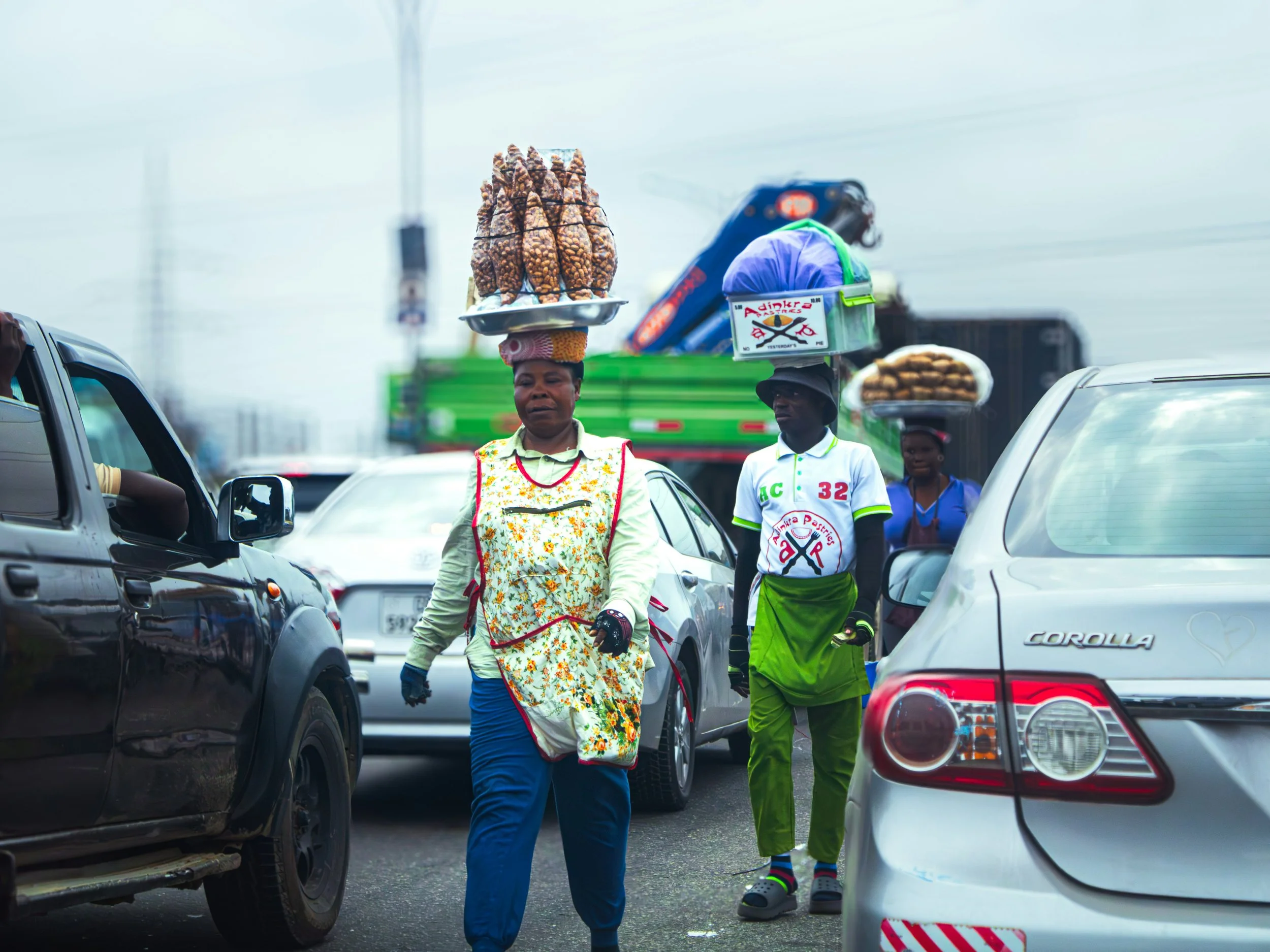
Ghana’s labour force expanded in 2025 with over 330,000 new jobs, but youth unemployment remains high at over 32 percent, according to new data from the Ghana Statistical Service.
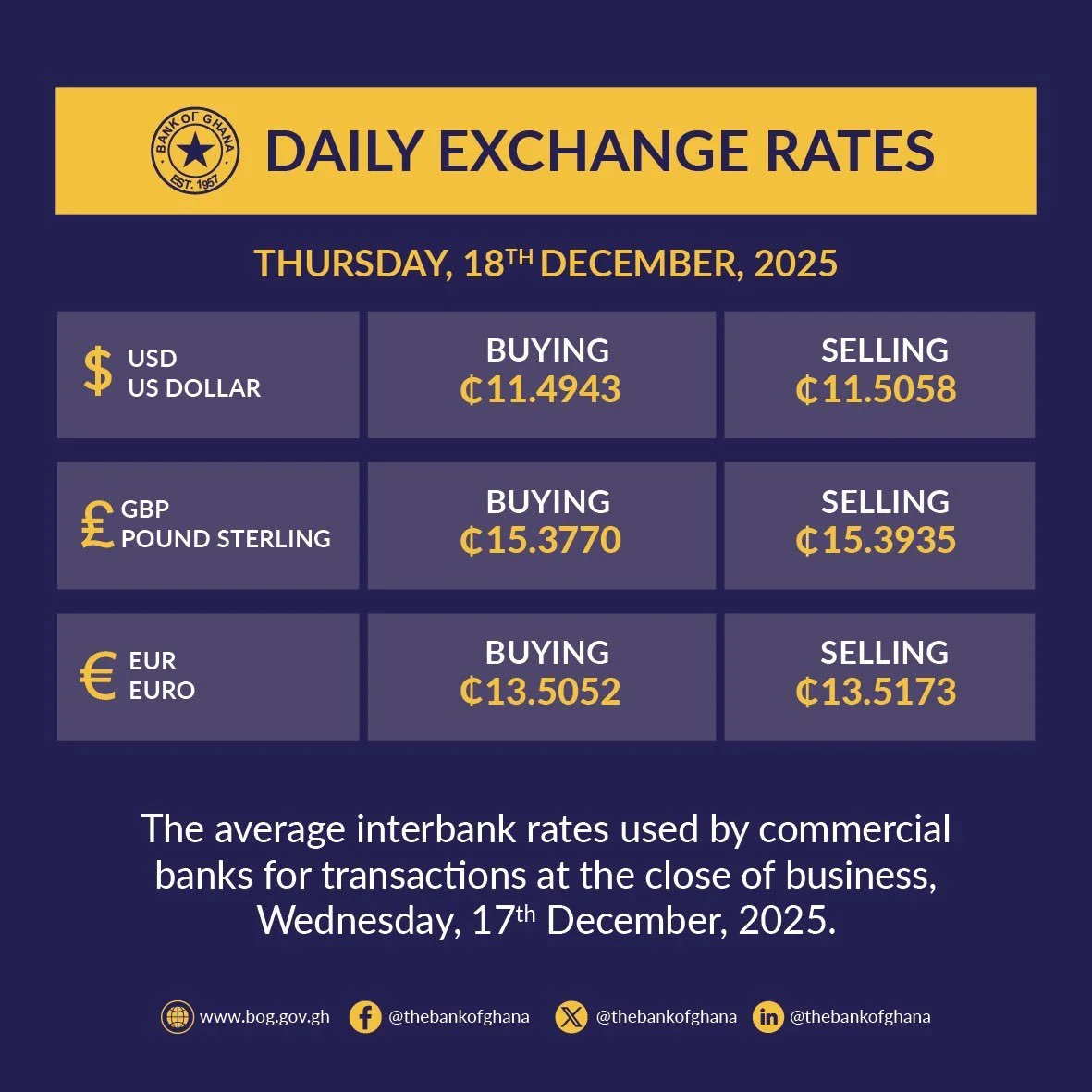
The Ghanaian cedi sold at ¢11.5058 to the US dollar on December 18, 2025, according to the Bank of Ghana’s latest interbank exchange rates.

Ghana’s economy expanded by 6.1% in the first nine months of 2025, with agriculture, ICT, and trade powering growth. Government Statistician Dr. Alhassan Iddrisu says the data shows “slightly stronger momentum” than 2024.
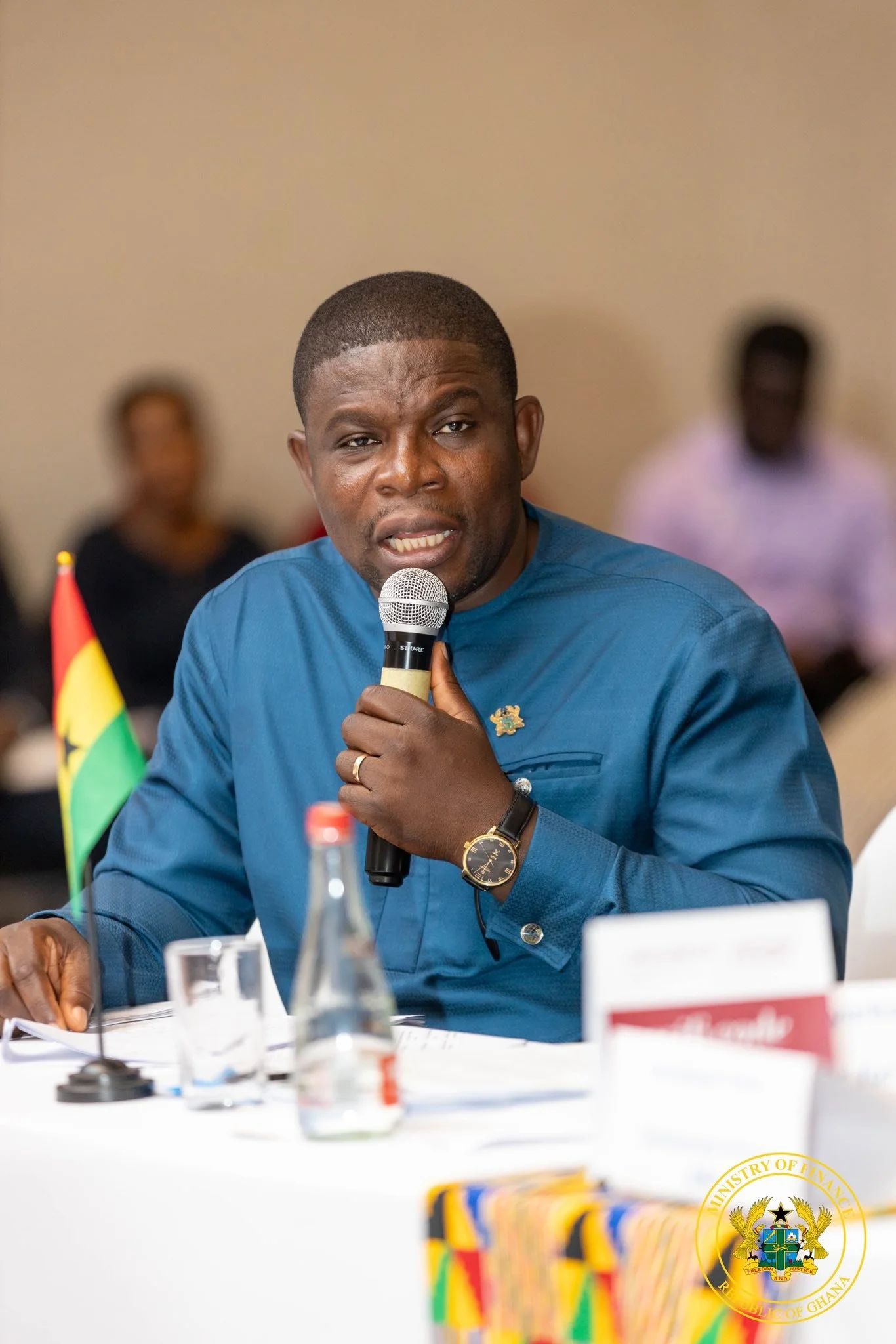
Germany has pledged an extra €3 million to Ghana’s Sustainable Energy for Climate Project, bringing total support to €10 million, as both nations deepen cooperation on renewable energy, efficiency, and climate resilience.

Ghana’s inflation rate dropped for the 11th consecutive month to 6.3% in November 2025, the lowest since 2021. The Ghana Statistical Service attributes the trend to price stability in food, non-food, and locally produced items.
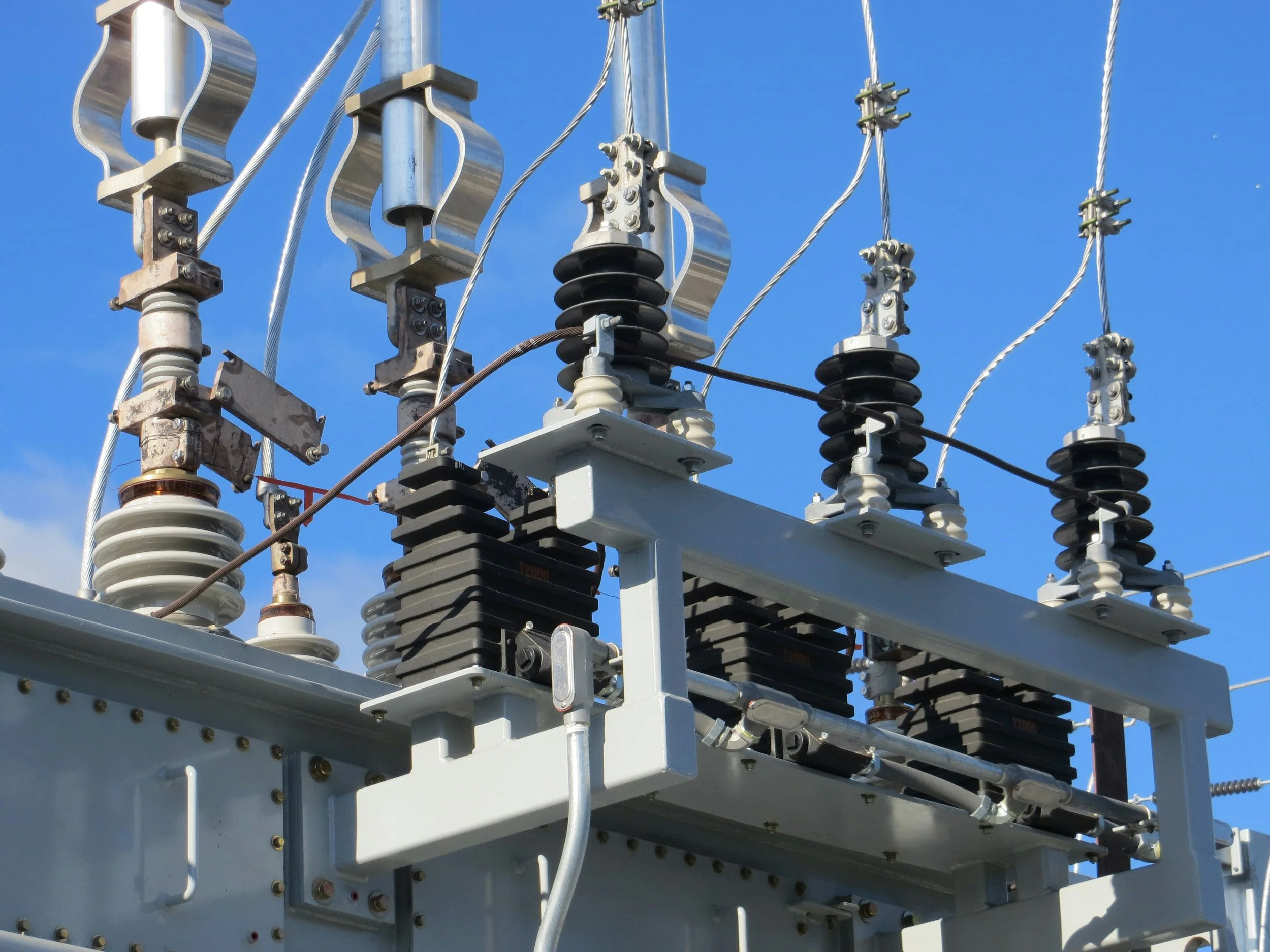
Ghana’s Public Utilities Regulatory Commission (PURC) has announced new tariffs effective January 1, 2026 — electricity to increase by 9.86% and water by 15.92% under the 2026–2030 Multi-Year Tariff Review. The adjustment reflects inflation, exchange rate, and gas cost projections.
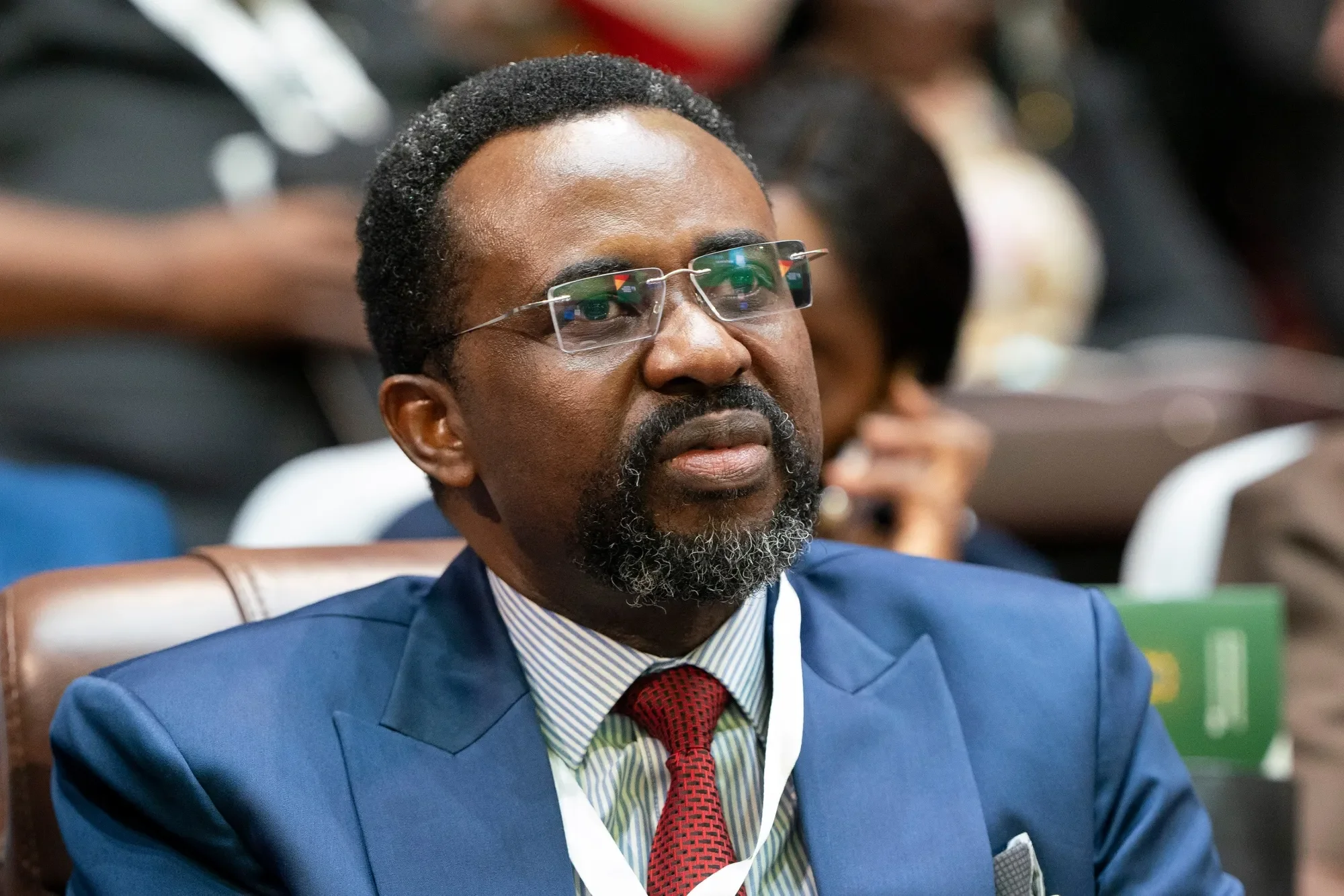
The Bank of Ghana has reduced its policy rate to 23%, citing strong economic recovery, stable inflation, and improved reserves. Governor Johnson Asiama says Ghana is “shifting from recovery to expansion” as the BoG balances disinflation with growth.