
IES contends NPA Price Floor Policy Amid Fuel Pricing Debate in Ghana
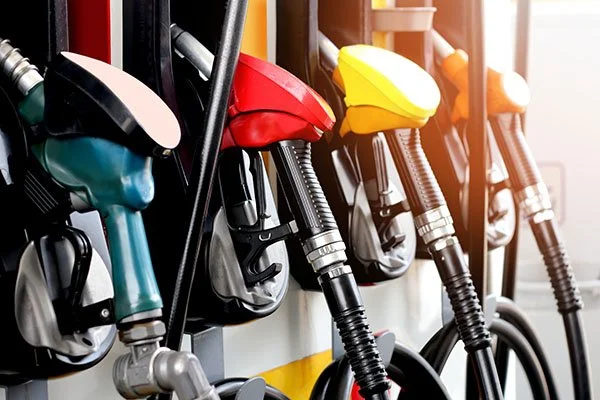
Accra, Ghana- The Institute for Energy Security (IES) has contended the National Petroleum Authority’s (NPA) fuel price floor policy, describing it as a critical safeguard for open competition and sustainable stability in Ghana’s downstream petroleum market.
In a press release issued on Monday, January 19, 2026, the policy think tank responded to recent comments by StarOil Ghana's Chief Executive Officer Kwame Tieku. Kwame Tieku suggested that the NPA’s price floor regime prevents the company from selling petrol at significantly lower prices. StarOil had claimed it could sell fuel at GHS 9.50 per litre during off-peak night hours if the price floor were removed.
IES acknowledged the growing public discussion and controversy around fuel pricing, particularly on social media. However, it cautioned that discussions must be grounded in sound market principles and the regulatory context, rather than in headline-driven claims. According to the institute, the downstream petroleum sector is capital-intensive, high-risk, and exposed to global price volatility and exchange rate fluctuations. This situation stresses the need for regulatory safeguards.
The institute stressed that the price floor was introduced as a competition-stabilising mechanism, not a price-fixing tool. It explained that the policy helps prevent predatory pricing by dominant or well-capitalised oil marketing companies. It also safeguards smaller and emerging firms, preserves healthy competition, and ensures supply continuity during market stress.
IES warned that international experience shows unregulated fuel price wars often result in monopolisation, supply disruptions, and higher consumer prices in the long term. The institute also raised concerns about selective price reductions during specific hours. It noted that fuel retailing does not operate like digital services, where marginal costs disappear at night. Storage, financing, distribution, and inventory risks remain constant.
The institute questioned whether prices significantly below the regulatory floor would be economically sustainable. It also asked whether losses would be cross-subsidised to crowd out competitors and what would happen once smaller players leave the market. These are precisely the risks the price floor policy was designed to prevent.
IES also pointed to responses from other industry players, including GOIL Ghana. Its Group CEO publicly challenged StarOil’s claims, noting that some companies advocating lower prices struggle to compete even at the approved floor price of GHS 9.80 per litre in the current pricing window.
Raising further concerns, the institute questioned whether calls for removing the price floor would have emerged if StarOil were not currently a market leader. It argued that regulatory protections have historically enabled both large and small oil marketing companies to survive competition, build scale, and invest in infrastructure.
In light of the public claims, IES formally called on the National Petroleum Authority to investigate StarOil’s pricing assertions and cost structures. It asked the authority to assess compliance with existing pricing regulations and reaffirm the principles behind the price floor regime in the interest of market stability.
The institute concluded that the national conversation on fuel pricing must move beyond headline-grabbing statements. It called for serious engagement with market economics, competition policy, and long-term consumer protection. The institute noted that short-term price reductions that undermine market structure are not pro-consumer in the long run.
Read Also