
Finance Minister Ato Forson to Present 2026 Budget on November 13
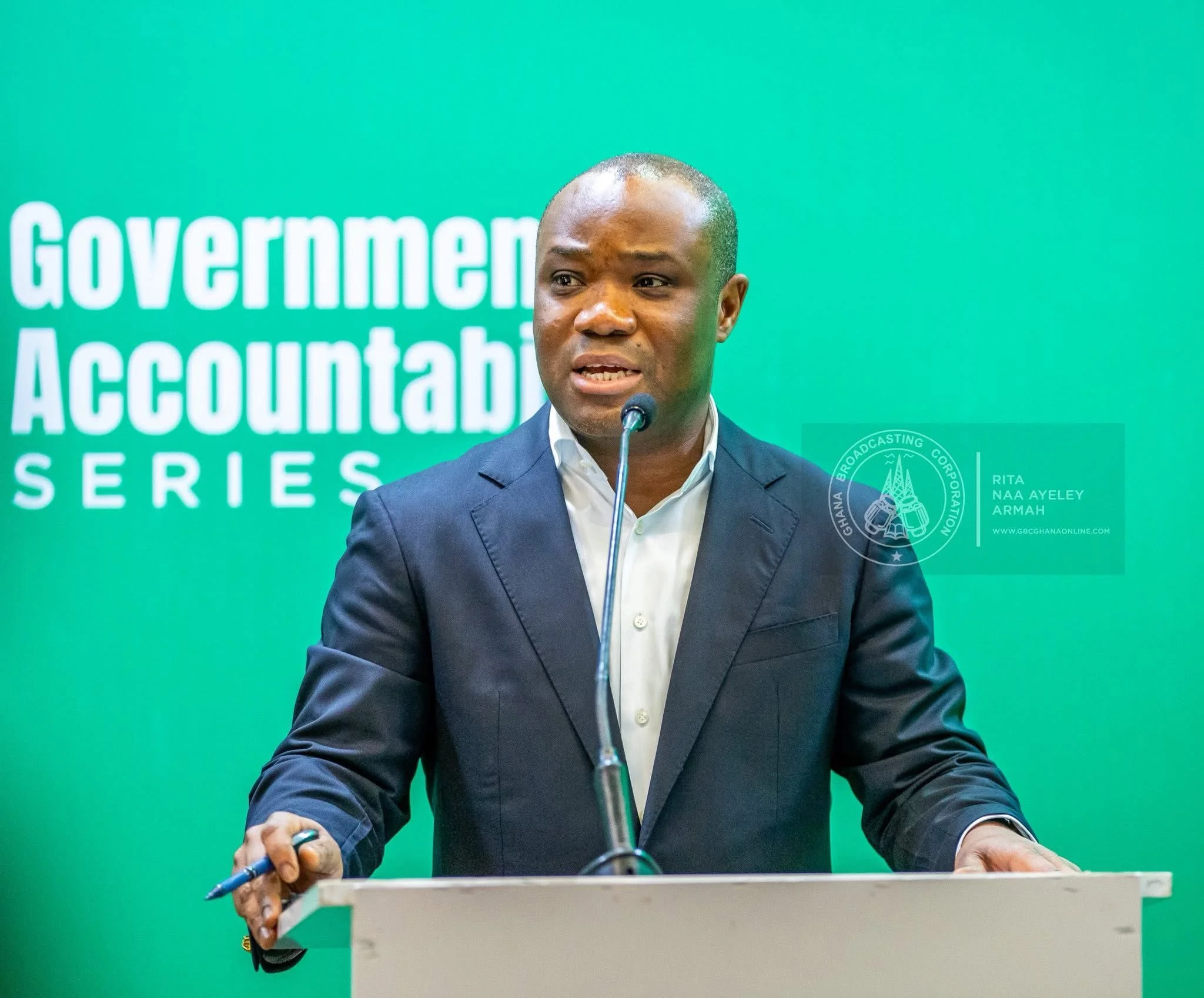
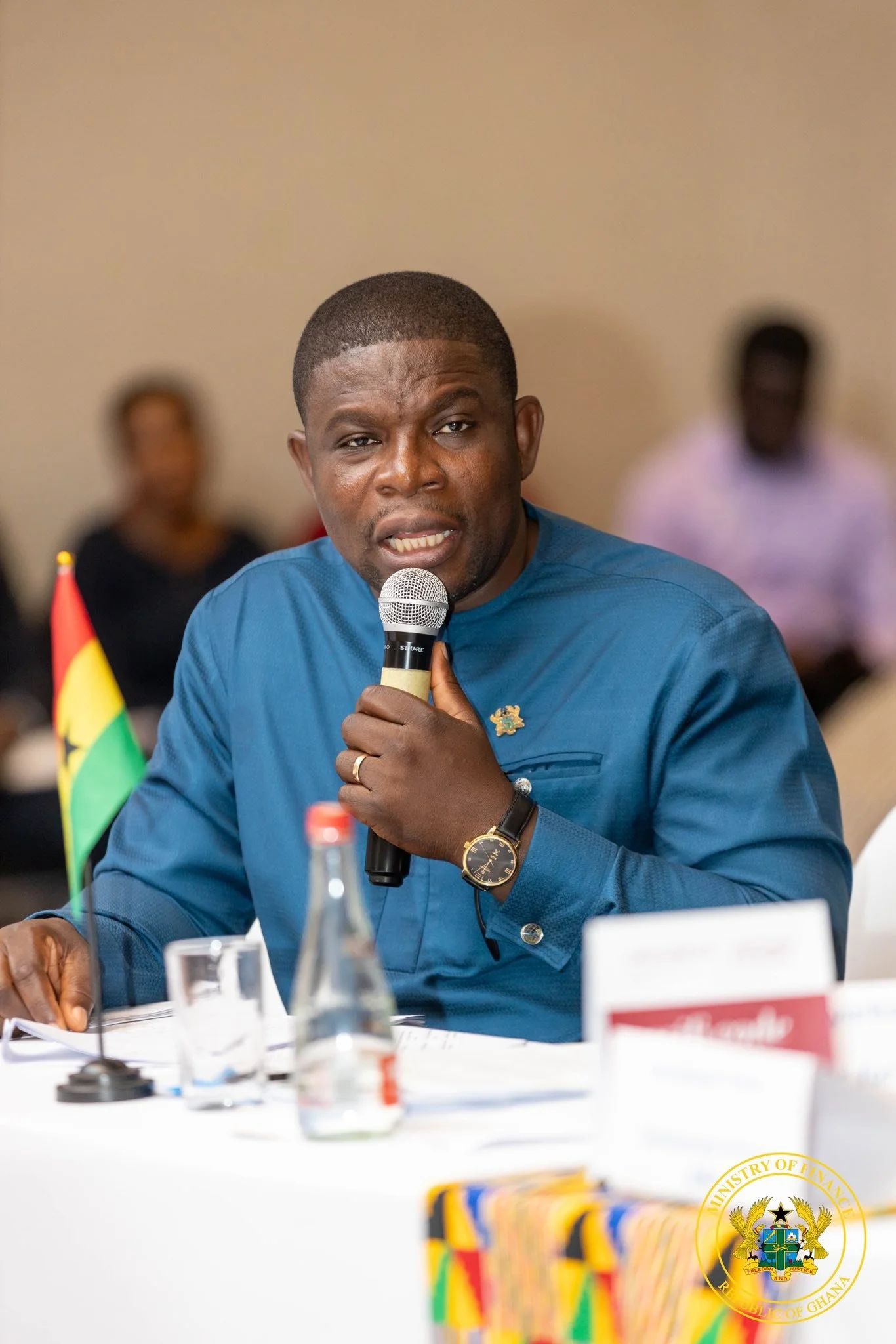
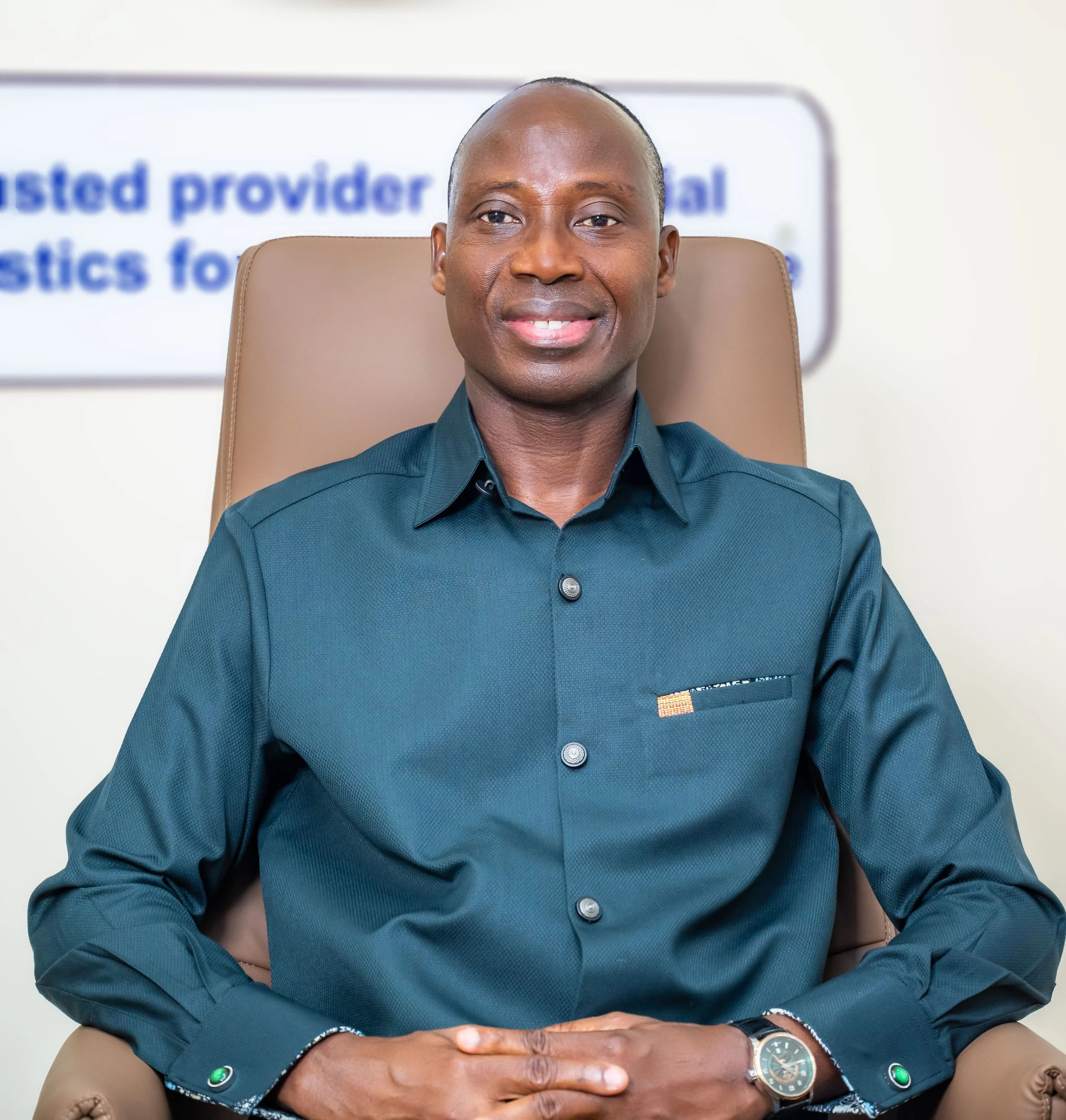
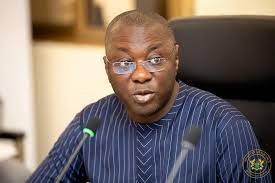
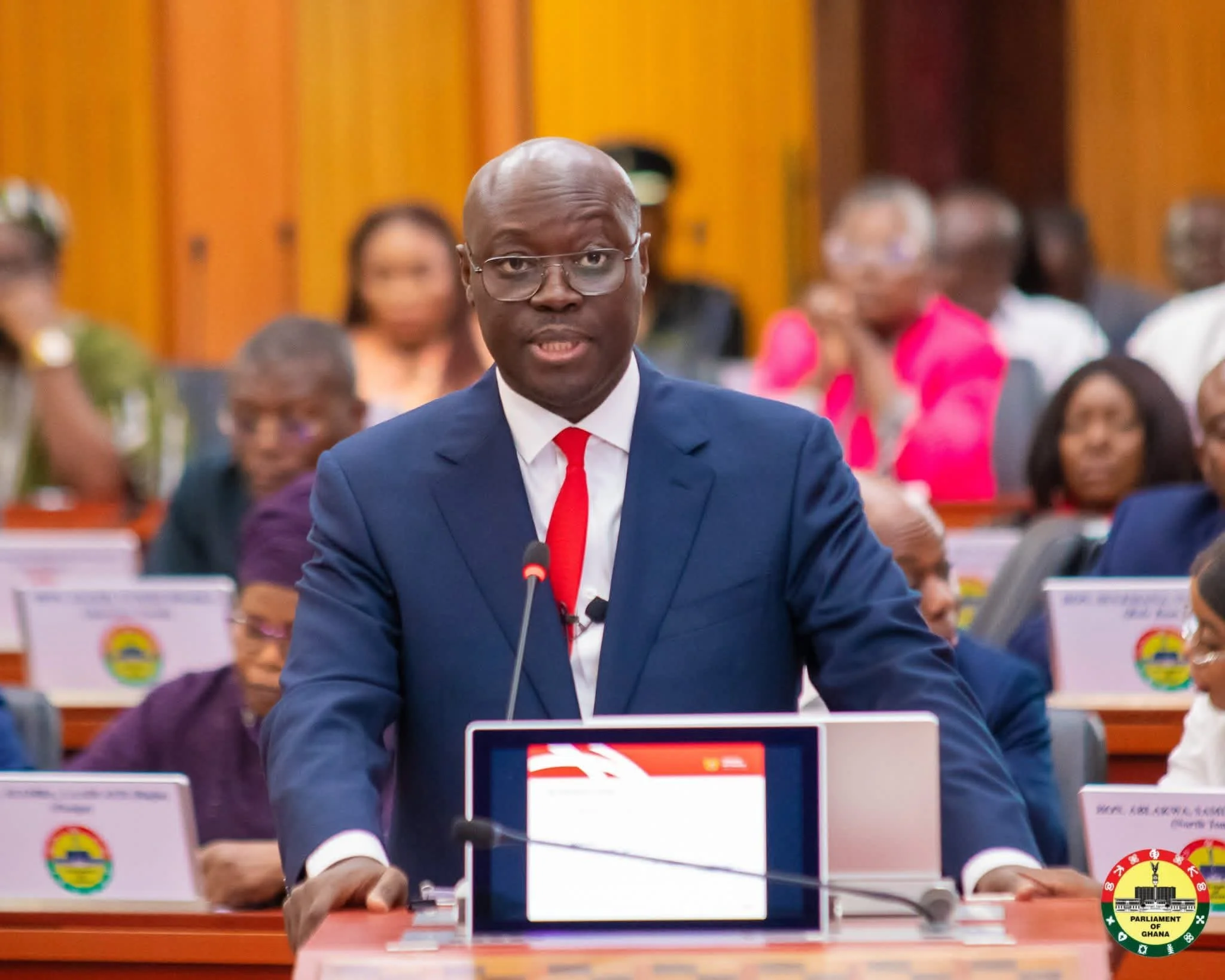
Finance Minister Dr. Ato Forson- Photo credit MoF
Finance Minister Dr. Ato Forson is expected to present the 2026 Budget Statement and Economic Policy to Parliament on Wednesday, November 13, 2025, according to sources close to the Finance Ministry.
The presentation will mark the government’s first full budget since winning the 2024 elections, and it is anticipated to outline key strategies for Ghana’s economic direction under the new mandate.
Under the Public Financial Management Act, the Finance Minister acting on behalf of the President must present the national budget to Parliament no later than November 15 each year.
Reports suggest that the Finance Ministry has completed several stakeholder and industry consultations to finalise policies and programmes for inclusion in the 2026 Budget.
Budget Priorities
Dr. Forson has previously indicated that the upcoming budget will focus on job creation, economic growth, and fiscal reforms aimed at stabilizing the economy.
Sources say new policy measures will likely target tax system restructuring and improved revenue mobilization, as the government works to strengthen economic resilience and support private sector growth.
On October 23, the Ministry of Finance organized a two-day stakeholder consultation as part of preparations for the 2026 Annual Budget. The engagement sought to solicit inputs from key sectors of the economy and deepen citizens' participation in the national budget process.
Deputy Minister for Finance, Mr. Thomas Nyarko Ampem who addressed the gathering, reaffirmed the government's commitment to continuous engagement with citizens throughout the budget process. The Deputy Minister reiterated the government's resolve to sustain the momentum of economic recovery while building a resilient economy that creates opportunities for all. "Our focus areas include economic stabilization and fiscal discipline, infrastructure and social development, social protection, education and youth empowerment, as well as employment creation," he added.
The Ministry of Finance reaffirmed that input from the consultations would play a crucial role in shaping policies and interventions in the 2026 Budget.
The Minister for Finance is required under Section 21 of the Public Financial Management Act, 2016 (Act 921), to prepare the annual budget in consultation with relevant stakeholders.
Read Also
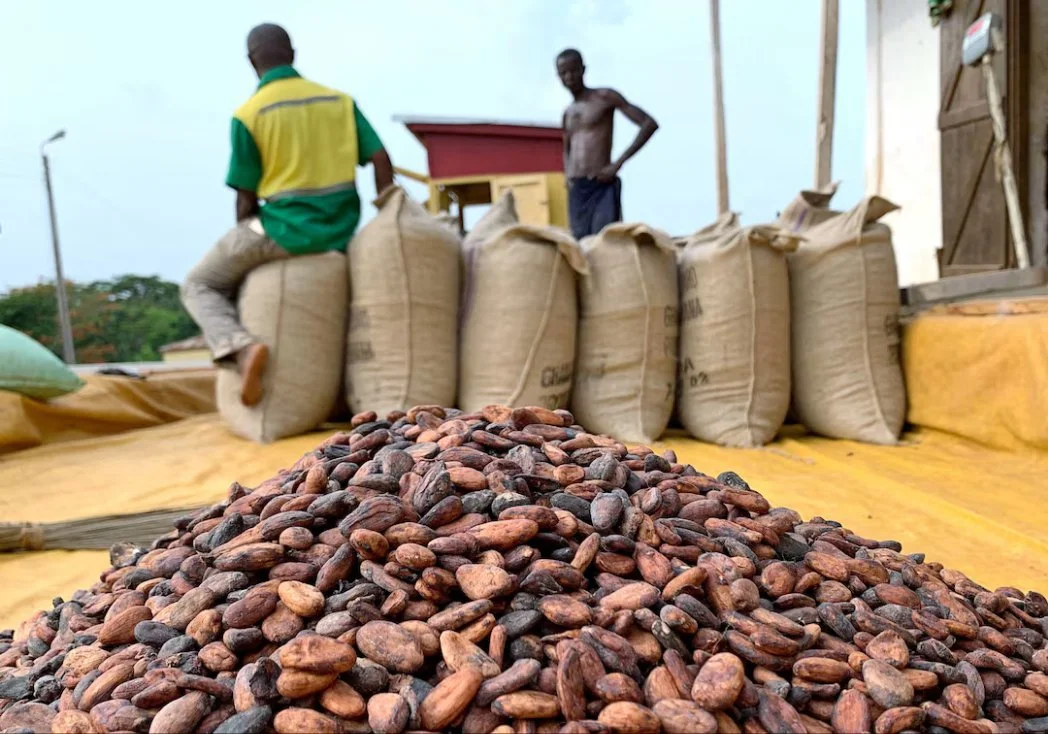
Ghana revises cocoa producer price to GHS41,392 per tonne after global prices fall from US$7,200 to US$4,100, citing liquidity and sustainability concerns.
Ghana’s economic activity expanded by 4.2% in November 2025, driven largely by strong growth in the services sector, according to the latest MIEG report from the Ghana Statistical Service.
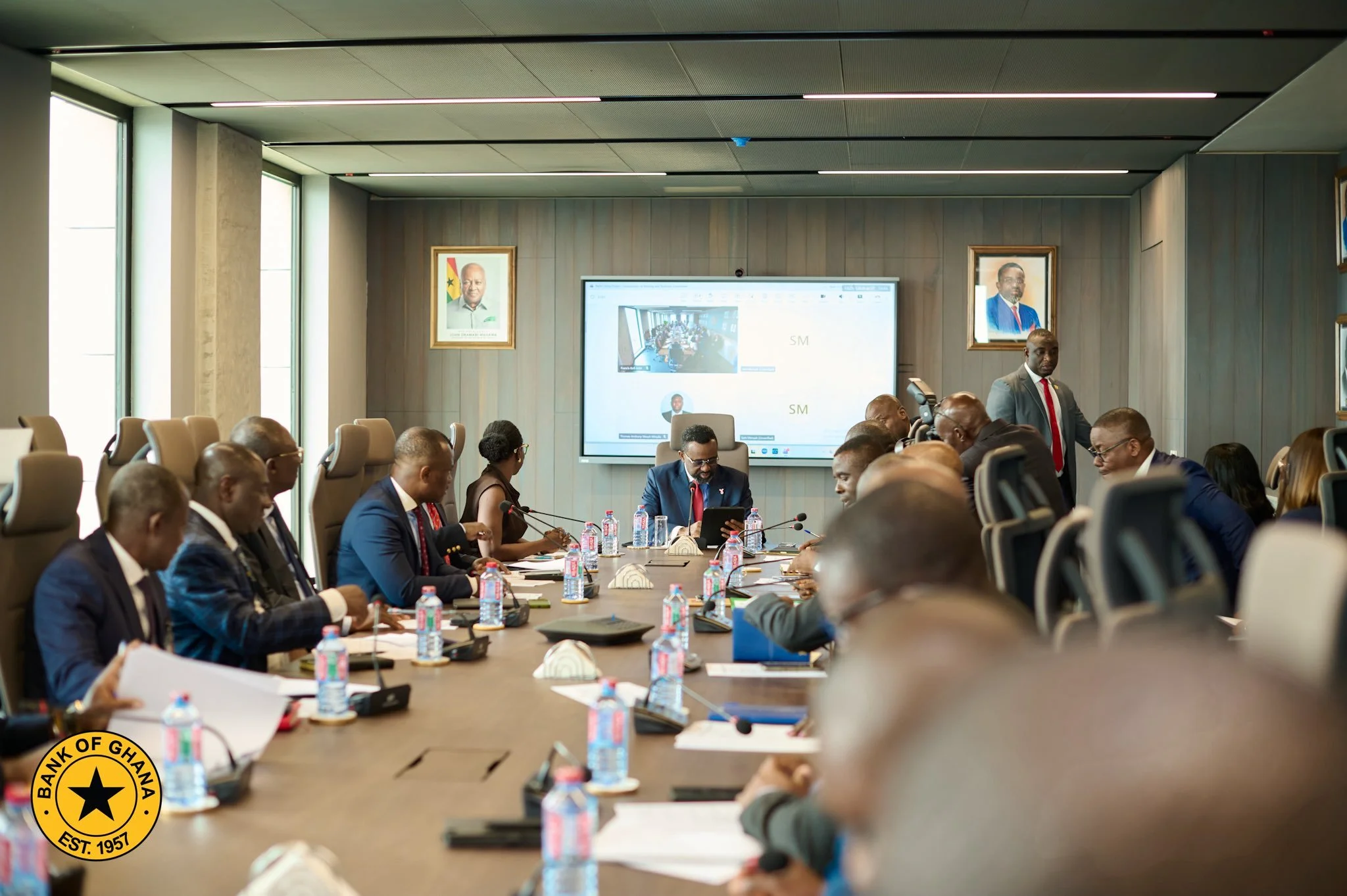
Bank of Ghana Governor Dr. Johnson Pandit Asiama launches the Bank Listing Project, citing GH¢100bn pension assets and calling for stronger transparency and market discipline.
Upper West, North East and Volta record highest food insecurity levels as Ghana’s national rate falls to 38.1%, with education emerging as a key protective factor.
COCOBOD CEO Randy Abbey says he inherited GH¢3.8bn negative equity, GH¢26bn road exposure and $48m procurement obligations at the cocoa regulator.
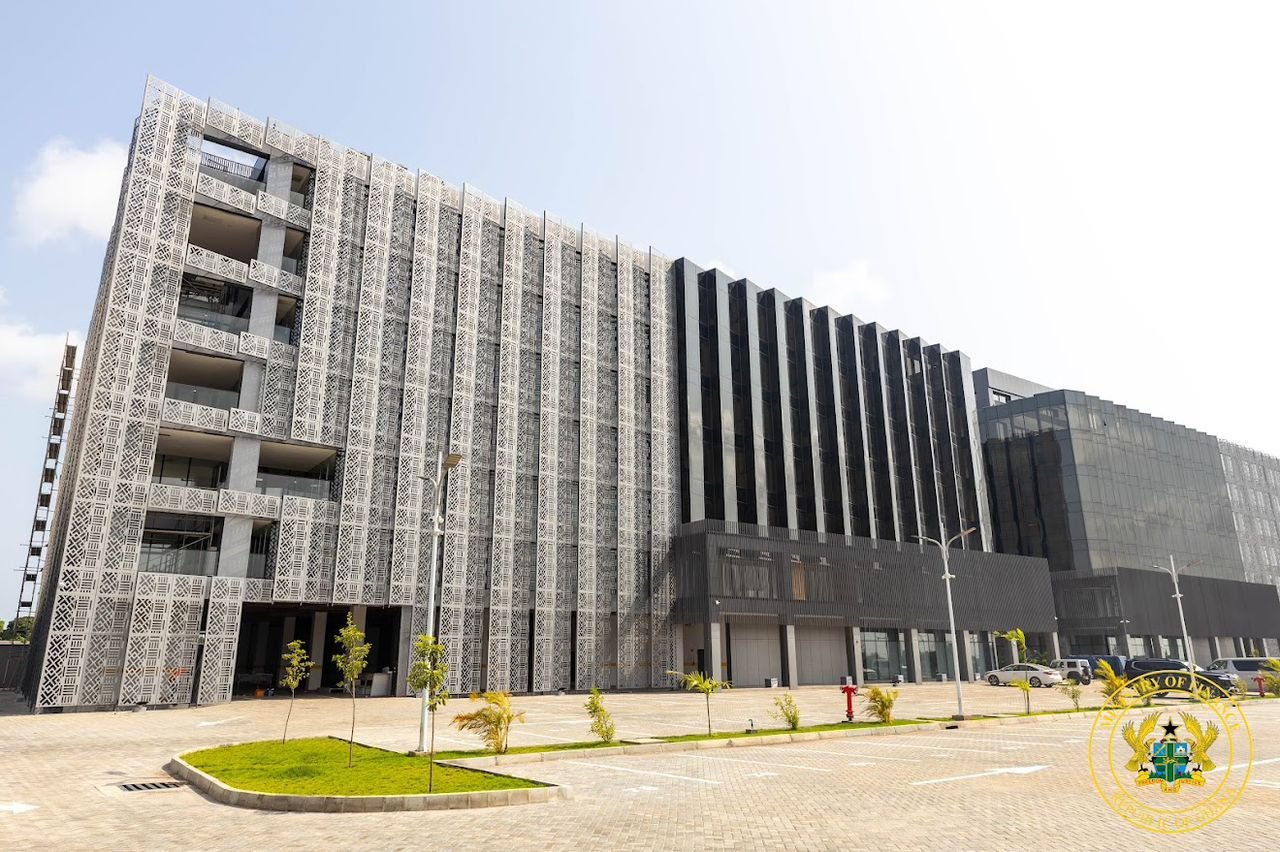
Ghana’s Ministry of Finance has officially relocated its offices to Kanda in Accra, with full operations commencing on February 9, 2026. Here’s what you need to know.
Ghana’s DVLA has released a full list of approved vehicle service rates, affecting registration, inspections, and conversions nationwide. Here’s what drivers need to know.
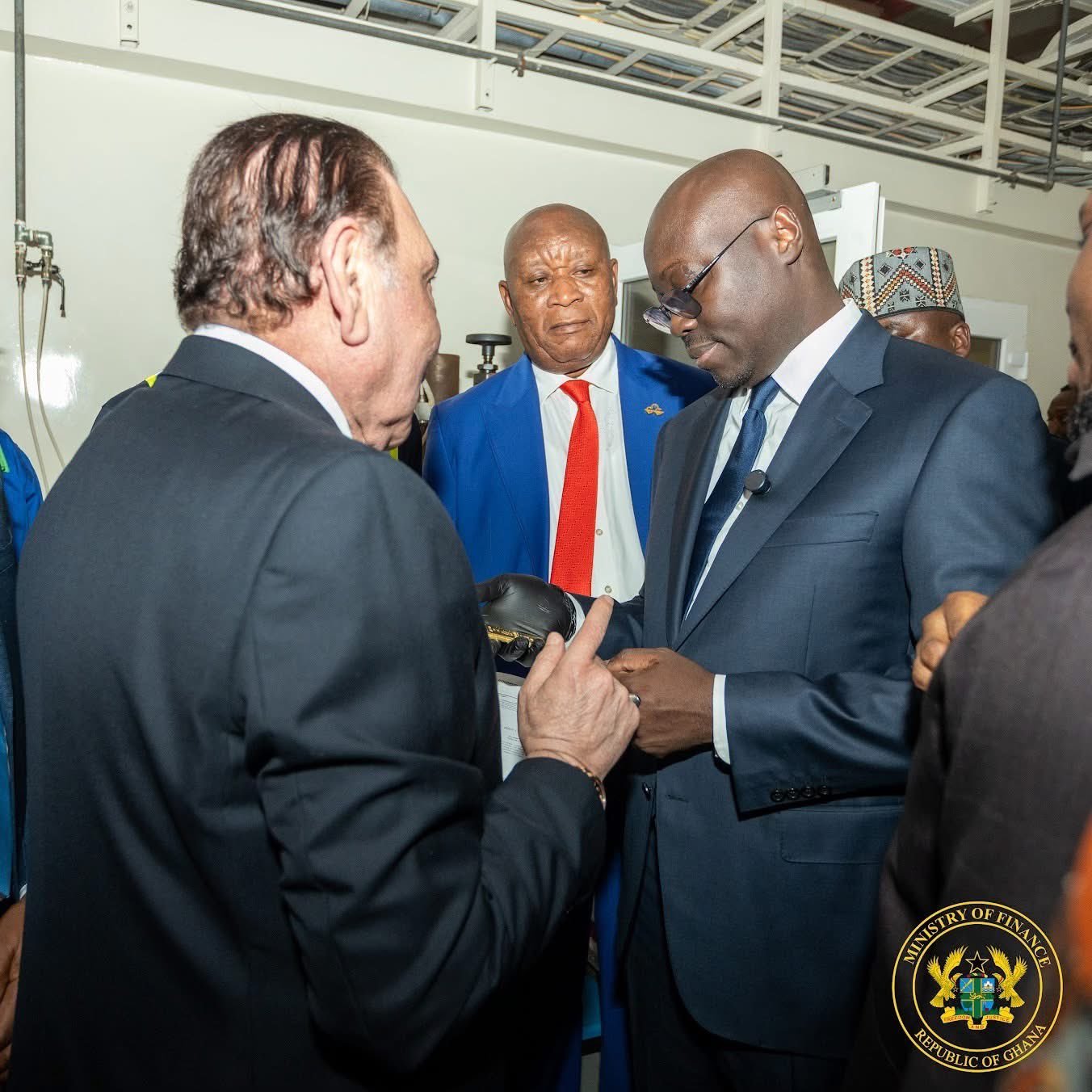
Finance Minister Cassiel Ato Forson says Ghana’s Gold Coast Refinery is now refining one ton of gold weekly, boosting local value addition and jobs.
Ghana’s inflation rate fell to 3.8% in January 2026, its lowest in four years, as food and non-food prices eased nationwide, according to GSS data.
Bank of Ghana Governor Dr. Johnson Asiama says inflation fell to 5.4% and reserves rose to $13.8bn as policymakers consider a cautious path for 2026.
The Institute for Energy Security says Ghana’s fuel price floor protects fair competition and long-term stability, responding to calls for lower petrol prices.
Government says the $1.4bn energy-sector payment has stabilized power supply, restored liquidity, and prevented a return of widespread outages.
New GSS data shows a 3.8% jump in economic activity driven mainly by services and manufacturing. Agriculture also ticked up slightly. Full report breaks down where the growth is coming from and what comes next.
Ghana’s labour force expanded in 2025 with over 330,000 new jobs, but youth unemployment remains high at over 32 percent, according to new data from the Ghana Statistical Service.
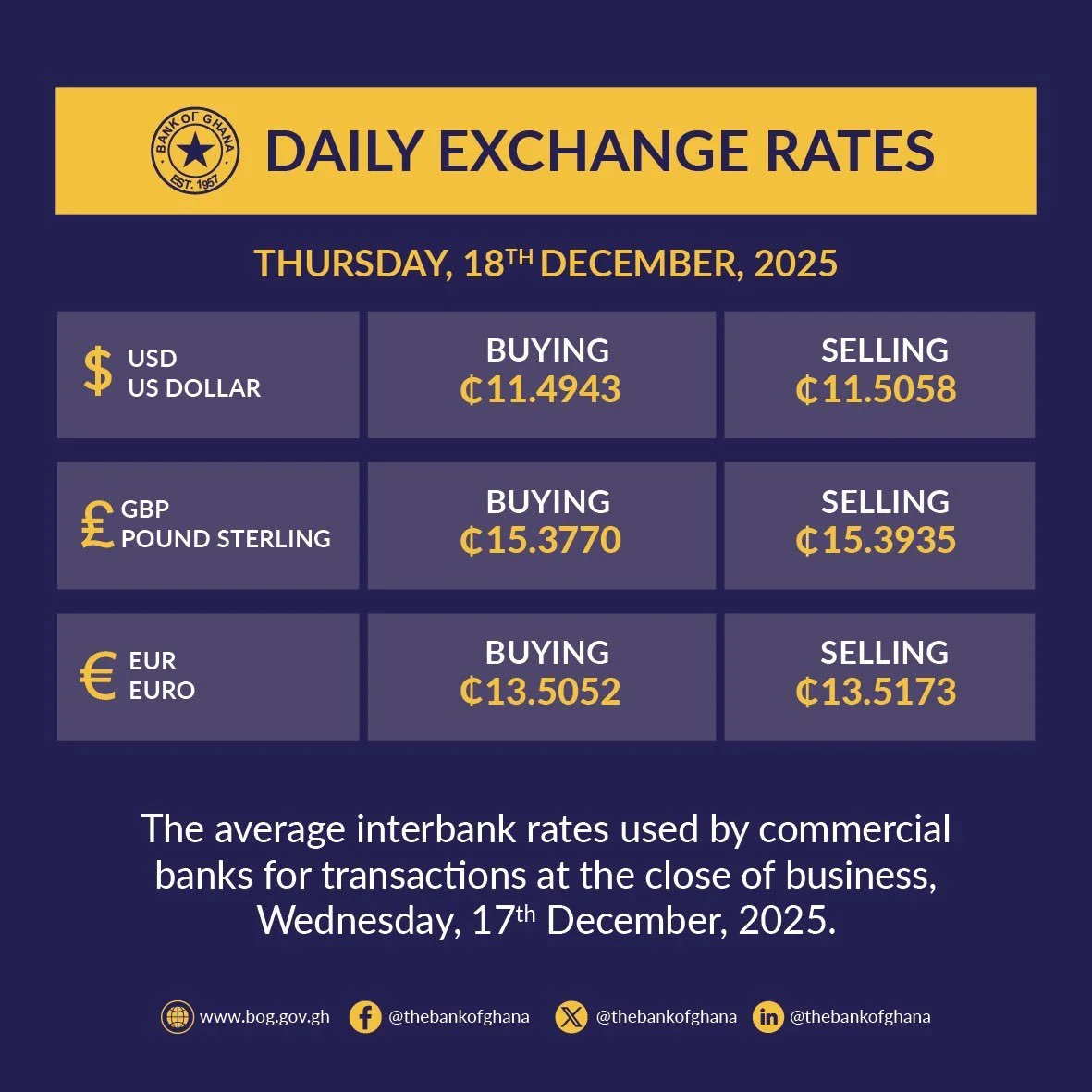
The Ghanaian cedi sold at ¢11.5058 to the US dollar on December 18, 2025, according to the Bank of Ghana’s latest interbank exchange rates.
Ghana’s economy expanded by 6.1% in the first nine months of 2025, with agriculture, ICT, and trade powering growth. Government Statistician Dr. Alhassan Iddrisu says the data shows “slightly stronger momentum” than 2024.
Germany has pledged an extra €3 million to Ghana’s Sustainable Energy for Climate Project, bringing total support to €10 million, as both nations deepen cooperation on renewable energy, efficiency, and climate resilience.
Ghana’s inflation rate dropped for the 11th consecutive month to 6.3% in November 2025, the lowest since 2021. The Ghana Statistical Service attributes the trend to price stability in food, non-food, and locally produced items.
Ghana’s Public Utilities Regulatory Commission (PURC) has announced new tariffs effective January 1, 2026 — electricity to increase by 9.86% and water by 15.92% under the 2026–2030 Multi-Year Tariff Review. The adjustment reflects inflation, exchange rate, and gas cost projections.
The Bank of Ghana has reduced its policy rate to 23%, citing strong economic recovery, stable inflation, and improved reserves. Governor Johnson Asiama says Ghana is “shifting from recovery to expansion” as the BoG balances disinflation with growth.
Deputy Majority Leader Alexander Afenyo-Markin has urged Parliament to reject the proposed 7% withholding tax increase, warning it will hurt Ghanaian small businesses and undermine economic recovery.
Ghana’s Special Prosecutor has rejected aspects of the IMF’s Governance and Corruption Diagnostic Report, saying the findings reflect 2023 challenges and not the Office’s current reforms, capacity, and anti-corruption performance.
Ghana Statistical Service has revised July 2025 MIEG growth down to 3.7% from the earlier 4.5%, while August 2025 economic activity expanded by 5.1%. Agriculture and services led the growth, though industry contracted.
Former Finance Minister Amin Adam says Ghana’s single-digit inflation is misleading, arguing in Parliament that rising prices of essential goods, failing Treasury bill auctions and weakened investor confidence reveal a struggling economy depriving citizens of decent livelihoods.
Former Information Minister Kojo Oppong Nkrumah warns that Ghana’s 2026 Budget faces a staggering revenue shortfall of up to GH₵19 billion, forcing the government to cut expenditure by GH₵28 billion. He urges Parliament to confront the structural weaknesses undermining the economy.
Two suspects have been arrested and arraigned for hoarding premix fuel, Fisheries Minister Emelia Arthur told Parliament. Automation reforms continue nationwide.
Ghana’s Presidential Spokesperson Felix Kwakye Ofosu has dismissed Minority allegations that the Bank of Ghana printed money to finance the Gold Board, insisting the bank only facilitated legal intermediation in the gold-for-reserves program.
Ghana’s Cedi @ 60 Conference sets a bold agenda for currency stability, digital innovation, and fiscal discipline, with BoG Governor Asiama calling for national commitment.
The Government of Ghana has officially abolished the COVID-19 Health Recovery Levy as part of sweeping 2026 VAT reforms. Finance Minister Dr. Ato Forson says the move will return GH₵3.7 billion to citizens and businesses while simplifying Ghana’s tax system and boosting fiscal efficiency.
Ghana’s 2026 Budget projects a minimum 4.8% GDP growth as Finance Minister Dr. Ato Forson outlines a strategy focused on fiscal discipline, revenue mobilisation, social protection, and sustained macroeconomic stability under the theme “Resetting for Growth, Jobs and Economic Transformation.”
Irene Anim is a news reporter and writer with DM Media Group